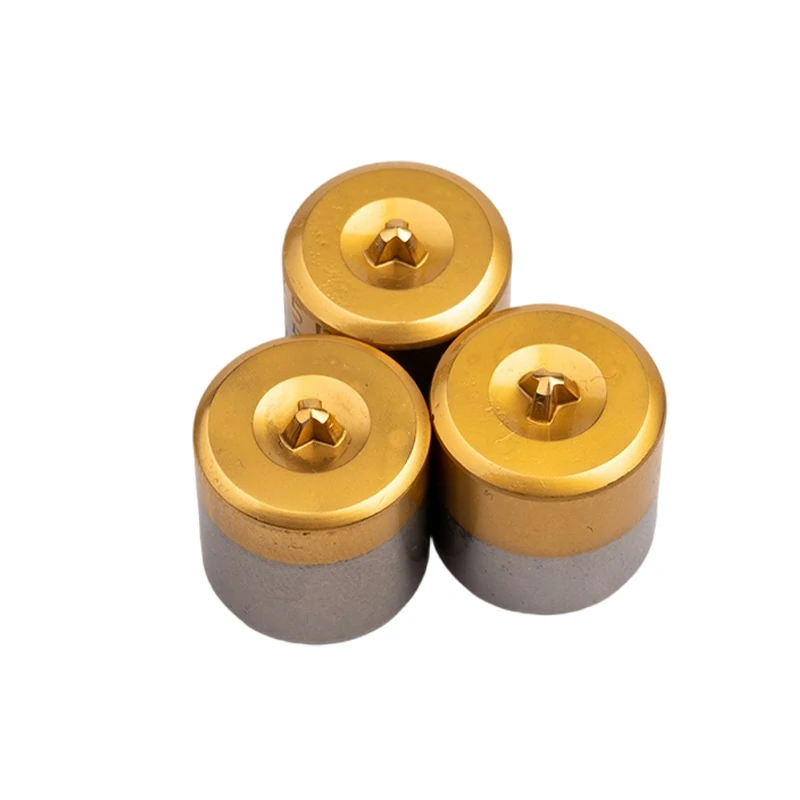
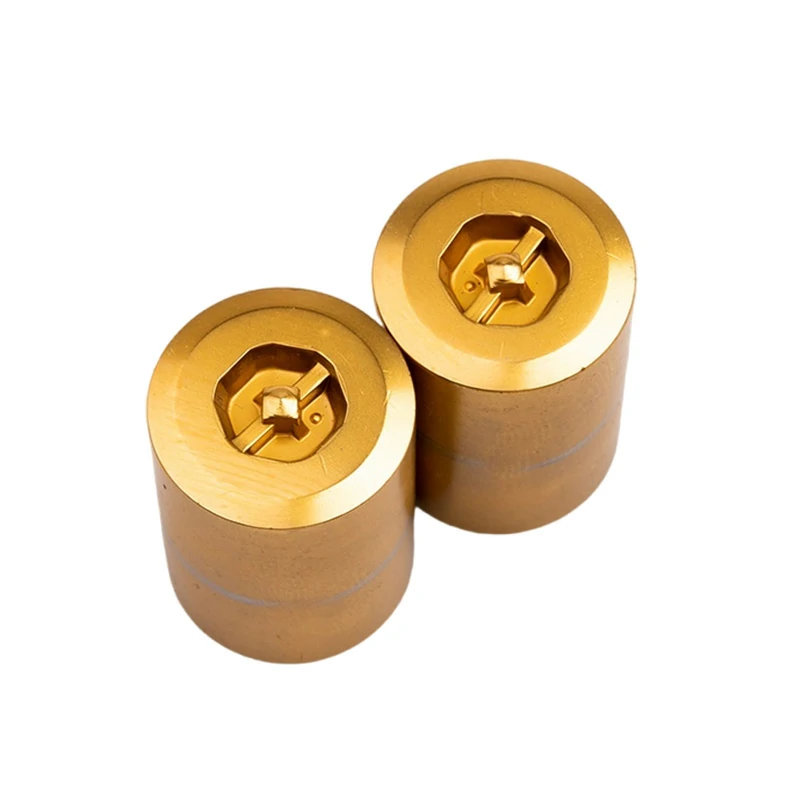
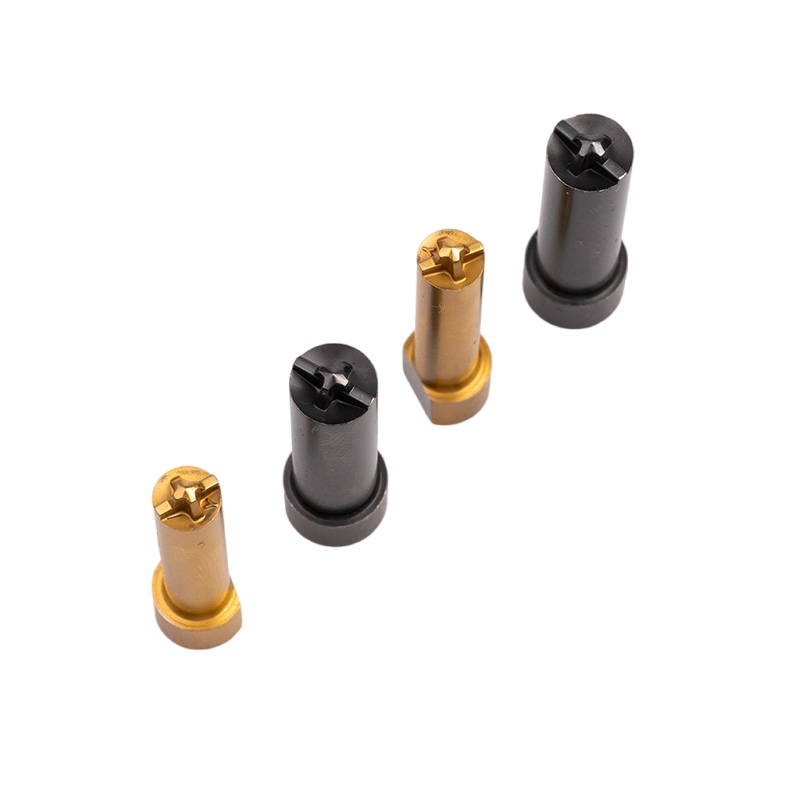
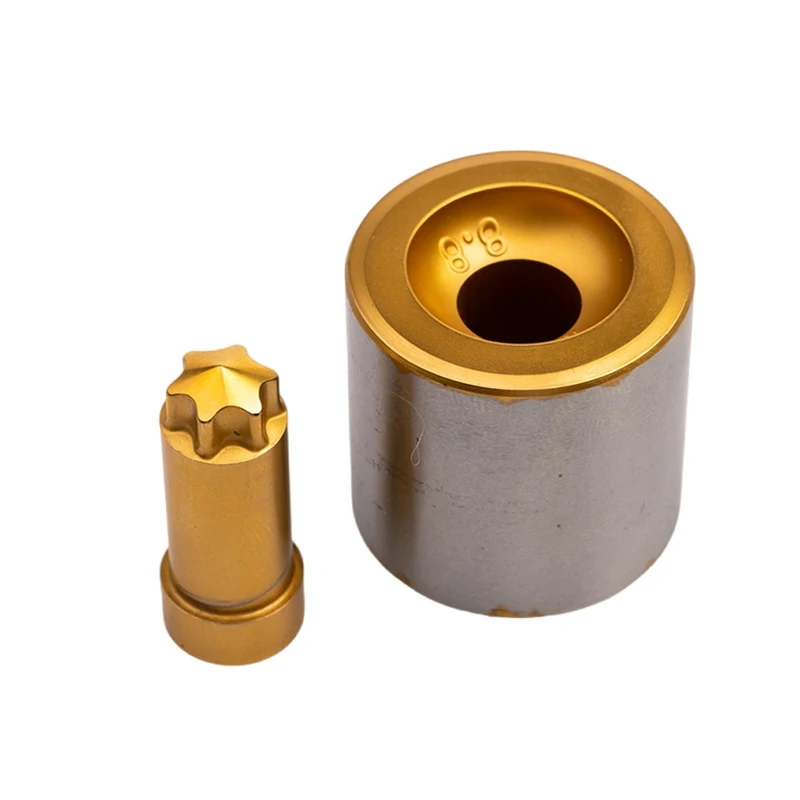
Carbide heading dies offer a multitude of top benefits that fundamentally transform fastener manufacturing, primarily driven by their exceptional hardness and wear resistance. These advantages include dramatically extended tool life, significantly reduced machine downtime, consistent production of high-quality fasteners with superior precision, and a substantial reduction in overall production costs, making them an indispensable investment for high-volume and demanding cold heading applications.
In the competitive landscape of fastener manufacturing, every operational efficiency and quality improvement translates directly into a stronger market position. Heading dies are at the heart of this process, shaping the critical features of countless screws, bolts, and rivets. While various materials can be used, carbide heading dies have emerged as the gold standard, offering a suite of benefits that far outweigh their initial investment. Let’s explore the top advantages that make carbide heading dies the preferred choice for discerning manufacturers worldwide.
Table of Contents
- What is the Primary Benefit of Carbide Heading Dies?
- How Do Carbide Dies Enhance Fastener Quality and Precision?
- What Impact Do Carbide Dies Have on Production Efficiency and Downtime?
- How Do Carbide Dies Contribute to Cost Savings and ROI?
- What Makes Carbide Dies Ideal for Challenging Materials?
- How Does XILUO Maximize the Benefits of Carbide Heading Dies?
1. What is the Primary Benefit of Carbide Heading Dies?
The primary benefit of carbide heading dies is their unparalleled wear resistance and significantly extended tool life, which directly translates into vastly improved manufacturing efficiency and reduced operational costs. Carbide heading dies, made from extremely hard tungsten carbide, can withstand the abrasive forces and high pressures of cold heading for millions more cycles than steel dies, drastically reducing the frequency of tool changes and machine downtime, thereby ensuring continuous, high-volume production.
Unmatched Durability and Lifespan
The core advantage of carbide lies in its ability to endure.
- Example 1: High-Volume Production Runs: In a typical cold heading operation producing millions of fasteners, a high-quality steel die might last for 100,000 to 500,000 cycles. A carbide heading die, however, can easily achieve 1,000,000 to 5,000,000 cycles, and often much more, especially when forming less abrasive materials. This means a single carbide die can outlast multiple steel dies.
- Example 2: Reduced Tooling Inventory: Because carbide dies last so much longer, manufacturers need to stock fewer replacement dies, simplifying inventory management and reducing capital tied up in spare parts.
- Theoretical Basis: Carbide’s extreme hardness (typically 89-91 HRA) directly correlates with its superior resistance to abrasive wear, which is the primary mode of failure for heading dies.
- Practical Impacts: This extended lifespan is the foundation upon which all other benefits are built, fundamentally altering the economics of fastener production.
| Die Material | Typical Lifespan (Cycles) | Wear Resistance (Relative) | Frequency of Replacement (Relative) |
| Tool Steel | 100,000 – 500,000 | Good | High |
| Carbide | 1,000,000 – 5,000,000+ | Excellent | Low |
Resistance to Deformation and Chipping
Beyond just wear, carbide resists structural degradation.
- Example 1: Maintaining Head Geometry: Under the immense compressive forces of cold heading, softer die materials can gradually deform, leading to “mushrooming” or loss of precise head geometry. Carbide’s high compressive strength (4000-5000 MPa) ensures that the die maintains its exact shape, producing consistent fastener heads throughout its long life.
- Example 2: Preventing Chipping: While carbide is harder, modern carbide grades are engineered with sufficient toughness (through optimized cobalt content) to resist chipping, especially at critical edges or corners, even under impact loads. This prevents premature failure and extends the die’s usable life.
- Practical Advice: Proper die design and machine setup are crucial to fully leverage carbide’s resistance to deformation and chipping. XILUO’s expertise ensures that their carbide dies are designed and manufactured to withstand these forces effectively.
2. How Do Carbide Dies Enhance Fastener Quality and Precision?
Carbide heading dies significantly enhance fastener quality and precision by maintaining their exact dimensions and surface integrity over extended production runs. Carbide dies ensure consistent dimensional accuracy, precise head forms, and superior surface finishes on fasteners for millions of cycles, preventing defects like burrs, incomplete fills, or inconsistent head heights. This unwavering precision minimizes scrap rates, reduces the need for secondary operations, and guarantees that fasteners meet stringent industry standards.
Consistent Dimensional Accuracy
The ability to hold tight tolerances is paramount for fastener quality.
- Example 1: Head Diameter and Height: As steel dies wear, their internal dimensions can change, leading to variations in fastener head diameter and height. Carbide dies, due to their superior wear resistance, maintain their precise internal geometry for a much longer period, ensuring that every fastener produced meets exact specifications.
- Example 2: Recess Form (e.g., Hex, Torx): For fasteners with intricate recesses, maintaining the sharp, accurate form of the recess is critical for proper tool engagement. Carbide dies resist the wear that would otherwise round off or distort these features, ensuring consistent, high-quality recesses.
- Theoretical Basis: Dimensional stability is directly linked to the die’s resistance to material removal and plastic deformation.
- Practical Impacts: Consistent dimensional accuracy reduces the need for costly sorting, rework, or rejection of non-conforming parts, leading to higher overall product quality and customer satisfaction.
| Quality Aspect | Impact of Carbide Dies |
| Dimensional Accuracy | Maintained over millions of cycles, tight tolerances |
| Head Form Precision | Exact replication of complex geometries, no “mushrooming” |
| Surface Finish | Smoother, fewer burrs, reduced galling |
| Defect Rate | Significantly reduced (burrs, incomplete fills, cracks) |
| Consistency | High uniformity from first to last part |
Superior Surface Finish and Reduced Defects
The die’s surface directly influences the fastener’s appearance and integrity.
- Example 1: Eliminating Burrs: Worn steel dies often produce fasteners with burrs, requiring additional deburring operations. Carbide dies, by maintaining sharp edges and a smooth surface, significantly reduce or eliminate burr formation, saving time and cost.
- Example 2: Preventing Galling and Material Transfer: Carbide’s dense, smooth surface and lower coefficient of friction make it highly resistant to galling (material sticking to the die). This prevents material transfer onto the fastener, ensuring a clean, unblemished surface finish and proper part ejection.
- Practical Advice: XILUO’s carbide heading dies are meticulously polished to achieve an exceptionally smooth surface finish, further enhancing their ability to produce high-quality fasteners with minimal defects. This attention to detail is a hallmark of XILUO’s commitment to precision.
3. What Impact Do Carbide Dies Have on Production Efficiency and Downtime?
Carbide heading dies have a transformative impact on production efficiency and significantly reduce machine downtime, directly boosting output and operational flow. By lasting 10 to 30 times longer than steel dies, carbide heading dies drastically cut the frequency of tool changes, minimizing machine idle time and maximizing continuous production runs. This leads to higher machine utilization, increased throughput, and a more streamlined manufacturing process, making production schedules more reliable and efficient.
Maximizing Machine Uptime
Every minute a machine is running is a minute it’s producing revenue.
- Example 1: Fewer Tool Changes: If a steel die needs to be changed every 200,000 parts, and a carbide die lasts 2,000,000 parts, the carbide die reduces tool changes by a factor of 10. Each tool change involves stopping the machine, removing the old die, installing the new one, and re-setting parameters – a process that can take 30 minutes to several hours.
- Example 2: Longer Uninterrupted Runs: The extended life of carbide dies allows for much longer continuous production runs without interruption. This is particularly beneficial for large orders, where maintaining a steady production flow is critical.
- Theoretical Basis: Downtime is a direct cost. Reducing downtime increases the effective capacity of the machine.
- Practical Impacts: Higher machine uptime means more parts produced per shift, leading to increased revenue and better utilization of capital equipment.
| Efficiency Metric | Impact of Carbide Dies |
| Machine Uptime | Significantly increased (fewer tool changes) |
| Production Throughput | Higher due to continuous operation |
| Tool Change Frequency | Drastically reduced (1/10th to 1/30th of steel dies) |
| Setup Time | Reduced over time (fewer setups) |
| Production Planning | More predictable and reliable |
Streamlined Operations and Predictability
Beyond just uptime, carbide dies contribute to a more predictable manufacturing environment.
- Example 1: Reduced Maintenance Scheduling: With fewer die changes, maintenance schedules become less cluttered and more predictable. This allows maintenance teams to focus on preventative tasks rather than reactive tool changes.
- Example 2: Consistent Process Parameters: Because carbide dies maintain their geometry for so long, the process parameters (e.g., forming pressure, feed rates) remain stable, reducing the need for constant adjustments and fine-tuning by operators.
- Practical Advice: XILUO’s high-quality carbide dies contribute to a more stable and predictable manufacturing process, allowing production managers to plan more effectively and achieve higher overall operational efficiency.
4. How Do Carbide Dies Contribute to Cost Savings and ROI?
Carbide heading dies, despite a higher initial investment, contribute significantly to long-term cost savings and deliver an excellent return on investment (ROI) through various operational efficiencies. Carbide dies reduce total tooling costs by lasting 10-30 times longer than steel, drastically cut labor costs associated with frequent tool changes and adjustments, minimize material waste by producing fewer defective parts, and lower energy consumption by maintaining optimal forming conditions. These combined savings quickly offset the initial cost, leading to substantial long-term profitability.
Lower Total Cost of Ownership (TCO)
The true cost of a die isn’t just its purchase price.
- Example 1: Reduced Tooling Purchases: If a carbide die costs 5-10 times more than a steel die but lasts 20 times longer, the effective cost per part for the carbide die is significantly lower. Over the lifespan of a machine, this translates into massive savings on die procurement.
- Example 2: Minimized Labor Costs: Each tool change requires operator time for removal, installation, and setup. Fewer changes mean less labor expenditure. If a tool change takes 30 minutes and an operator earns 30/hour,10fewerchangessave30/hour, 10 fewer changes save 30/hour,10fewerchangessave150 in labor alone, not counting lost production.
- Theoretical Basis: TCO considers all costs associated with an asset over its entire lifecycle, not just the initial purchase price.
- Practical Impacts: XILUO encourages customers to perform a TCO analysis, which consistently demonstrates the superior economic value of carbide dies for high-volume production.
| Cost Category | Impact of Carbide Dies |
| Initial Purchase | Higher (5-10x steel) |
| Total Tooling Cost | Lower (due to extended life) |
| Labor Costs | Reduced (fewer tool changes, less adjustment) |
| Downtime Costs | Significantly reduced (higher uptime) |
| Scrap/Rework Costs | Minimized (consistent quality) |
| Energy Consumption | Potentially lower (consistent process, less friction) |
| ROI | High, especially in high-volume, demanding applications |
Reduced Material Waste and Energy Consumption
Efficiency extends beyond just the die itself.
- Example 1: Less Scrap: Worn dies produce defective parts that must be scrapped, wasting expensive raw material. Carbide dies, by maintaining precision, drastically reduce scrap rates, leading to significant material savings.
- Example 2: Optimized Forming Conditions: A consistently sharp and precise carbide die can often form parts with less force or more efficiently, potentially leading to minor energy savings over millions of cycles.
- Practical Advice: The cumulative effect of these savings makes carbide dies a strategic investment that pays dividends over the long term, enhancing profitability and competitiveness.
5. What Makes Carbide Dies Ideal for Challenging Materials?
Carbide heading dies are uniquely ideal for processing challenging materials due to their exceptional hardness, wear resistance, and high compressive strength, which far exceed those of steel. Carbide dies excel at forming abrasive, high-strength, or work-hardening materials like stainless steel, high-carbon steel, and exotic alloys, where regular steel dies would rapidly wear, gall, or deform. Their ability to maintain precision under extreme conditions ensures consistent quality and acceptable tool life, making them indispensable for these demanding applications.
Handling Abrasive and High-Strength Materials
Some materials are inherently tougher on tooling.
- Example 1: Stainless Steel Fasteners: Stainless steel is notoriously abrasive and prone to work-hardening and galling. Regular steel dies quickly wear down and suffer from material adhesion. Carbide dies, with their superior hardness and smoother surface, resist these effects much more effectively, providing a viable and long-lasting solution for stainless steel heading.
- Example 2: High-Carbon and Alloy Steels: Forming fasteners from high-carbon or alloy steels requires immense force and generates significant abrasive wear. Carbide dies are essential for maintaining tool life and part quality when working with these demanding materials, where steel dies would fail prematurely.
- Theoretical Basis: The wear rate is highly dependent on the hardness and abrasiveness of the workpiece material. Carbide’s extreme hardness provides a much larger differential against these challenging materials.
- Practical Impacts: For manufacturers specializing in high-performance fasteners made from difficult materials, carbide dies are not just a benefit; they are a fundamental requirement for production.
| Workpiece Material | Challenges for Dies | Why Carbide Excels |
| Stainless Steel | Abrasive, work-hardening, prone to galling | Extreme hardness, resistance to adhesion, smooth surface |
| High Carbon Steel | High hardness, very abrasive | Superior hardness, high compressive strength |
| Alloy Steels | High strength, abrasive, requires high forming forces | High compressive strength, excellent wear resistance |
| Exotic Alloys | Extreme hardness, high strength, unique wear mechanisms | Unmatched hardness, tailored carbide grades for specific needs |
Maintaining Precision Under Extreme Conditions
Challenging materials often require higher forming pressures.
- Example 1: High Forming Pressures: When forming large heads or working with high-strength materials, the compressive forces on the die can be enormous. Carbide’s exceptional compressive strength ensures that the die does not deform or “mushroom” under these pressures, maintaining the precise head form.
- Example 2: Consistent Performance: Even under the most demanding conditions, carbide dies provide consistent performance, ensuring that the last part produced is as high quality as the first, which is critical when working with expensive or difficult-to-process materials.
- Practical Advice: XILUO’s expertise in material science and die design allows them to recommend and produce carbide heading dies specifically engineered to excel with the most challenging fastener materials, ensuring optimal performance and longevity.
6. How Does XILUO Maximize the Benefits of Carbide Heading Dies?
XILUO (Dongguan Xiluo Mold Technology Co., Ltd.) is dedicated to maximizing the benefits of carbide heading dies through a comprehensive approach rooted in extensive experience, advanced technology, and unwavering quality. XILUO maximizes the benefits of carbide heading dies by leveraging over 24 years of industry expertise, utilizing only premium, high-grade tungsten carbide materials, employing state-of-the-art manufacturing processes for unparalleled precision and surface finish, and implementing rigorous multi-stage quality control. Furthermore, XILUO offers customized design and specialized surface treatments to perfectly match specific application demands, ensuring optimal performance, extended tool life, and superior fastener quality for clients worldwide.
Expertise and Material Excellence
The foundation of XILUO’s superior dies.
- Example 1: 24+ Years of Industry Leadership: With over two decades of specialized experience, XILUO possesses an unparalleled understanding of cold heading processes and die requirements. This deep knowledge informs every aspect of their die design and manufacturing, ensuring optimal performance and longevity.
- Example 2: Premium Carbide Selection: XILUO sources and utilizes only the highest quality tungsten carbide grades, carefully selected for their specific balance of hardness, toughness, and wear resistance. Their expertise ensures the right carbide grade is chosen for each unique application, maximizing its benefits.
- Theoretical Basis: Experience combined with material science knowledge leads to optimized product performance.
- Practical Impacts: XILUO’s commitment to excellence starts with the very best materials, ensuring their carbide dies have the inherent properties to deliver maximum benefits.
| XILUO Advantage | How it Maximizes Carbide Die Benefits |
| 24+ Years Expertise | Optimized designs, material selection, process control |
| Premium Carbide Mat. | Superior inherent hardness, wear resistance, compressive strength |
| Advanced Manufacturing | Unparalleled precision, superior surface finish, reduced stress |
| Rigorous Quality Control | Ensures consistency, prevents defects, guarantees performance |
| Customization (OEM/ODM) | Tailored solutions for specific fastener types and materials |
| Surface Treatments | Further enhances wear resistance, reduces friction/galling |
| One-Stop Solution | Comprehensive support from design to delivery |
Advanced Manufacturing and Quality Assurance
Precision and consistency are key to unlocking carbide’s full potential.
- Example 1: State-of-the-Art Production: XILUO’s 10,000 square meter facility houses over 200 sets of advanced processing equipment, enabling the production of carbide dies with unparalleled precision and an exceptionally smooth surface finish. This meticulous manufacturing reduces friction, prevents galling, and minimizes stress points, all critical for extending die life and enhancing fastener quality.
- Example 2: Comprehensive Quality Control: XILUO implements stringent quality control at every stage, from raw material inspection to final product verification. Advanced testing equipment, including profile projectors and secondary element measuring machines, ensures that every carbide die meets the highest standards for dimensional accuracy, material integrity, and surface quality, guaranteeing consistent benefits for the customer.
- Practical Advice: XILUO offers comprehensive OEM and ODM services, providing customized carbide heading die solutions tailored to specific customer requirements. This bespoke approach ensures that the benefits of carbide are perfectly aligned with the unique demands of each fastener and production process.
Conclusion
The benefits of carbide heading dies are profound and far-reaching, making them an indispensable asset in modern fastener manufacturing. Their unparalleled wear resistance and extended tool life are the foundation for a cascade of advantages, including enhanced fastener quality and precision, dramatically improved production efficiency through reduced downtime, and significant long-term cost savings that deliver an excellent return on investment. Furthermore, carbide dies are uniquely suited to excel when processing challenging and abrasive materials, where regular steel dies would quickly fail.
XILUO (Dongguan Xiluo Mold Technology Co., Ltd.) is your trusted partner in harnessing the full potential of carbide heading dies. With over 24 years of industry leadership, a commitment to premium materials, state-of-the-art manufacturing, and rigorous quality control, XILUO engineers and produces high-precision, durable carbide heading dies that consistently deliver maximum benefits. Choose XILUO to elevate your fastener production, achieve superior quality, and optimize your operational efficiency with tooling built for longevity and performance.