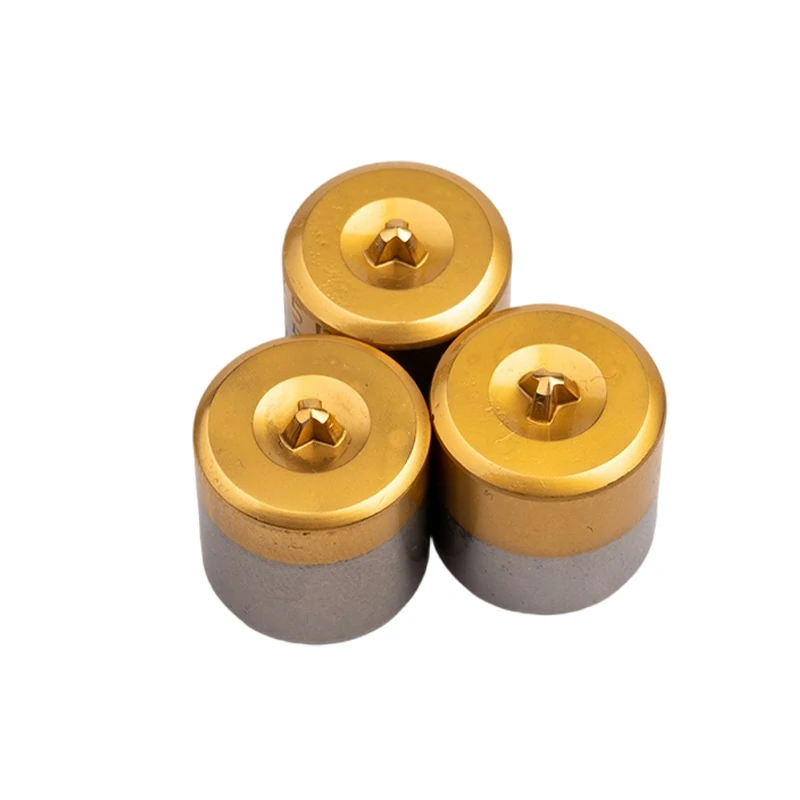
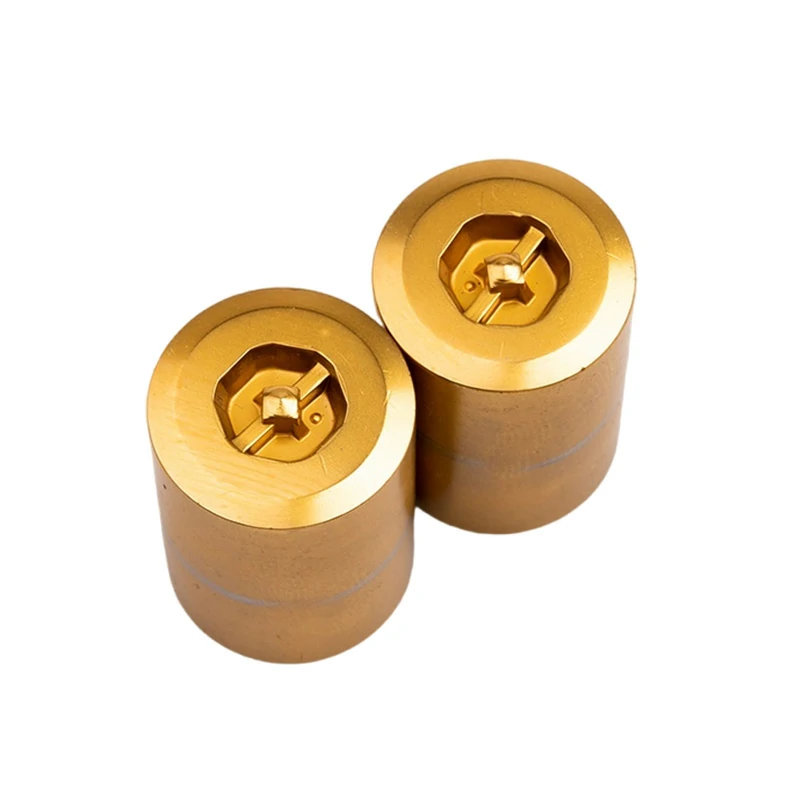
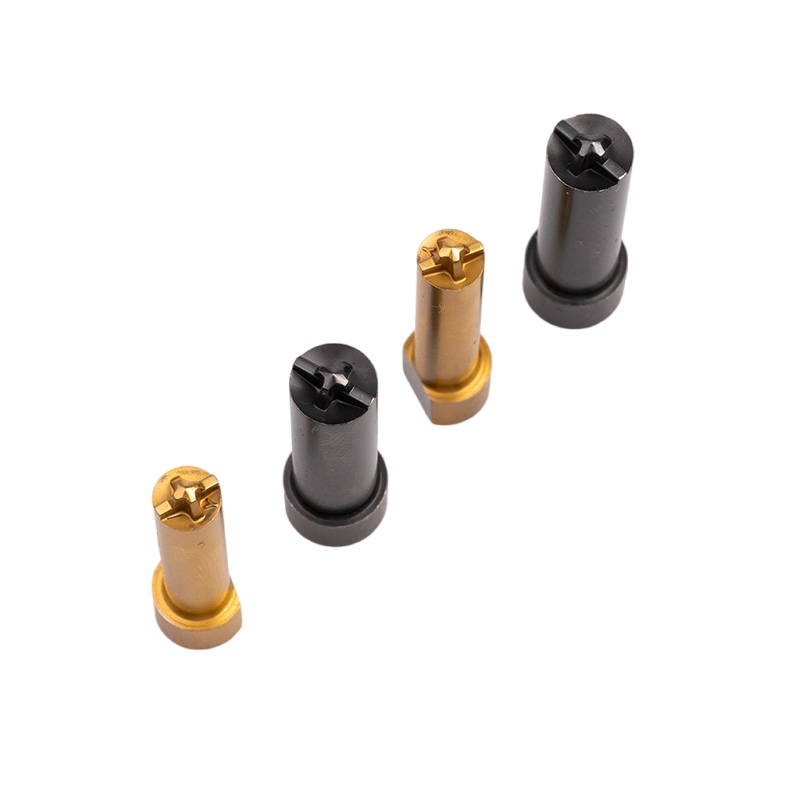
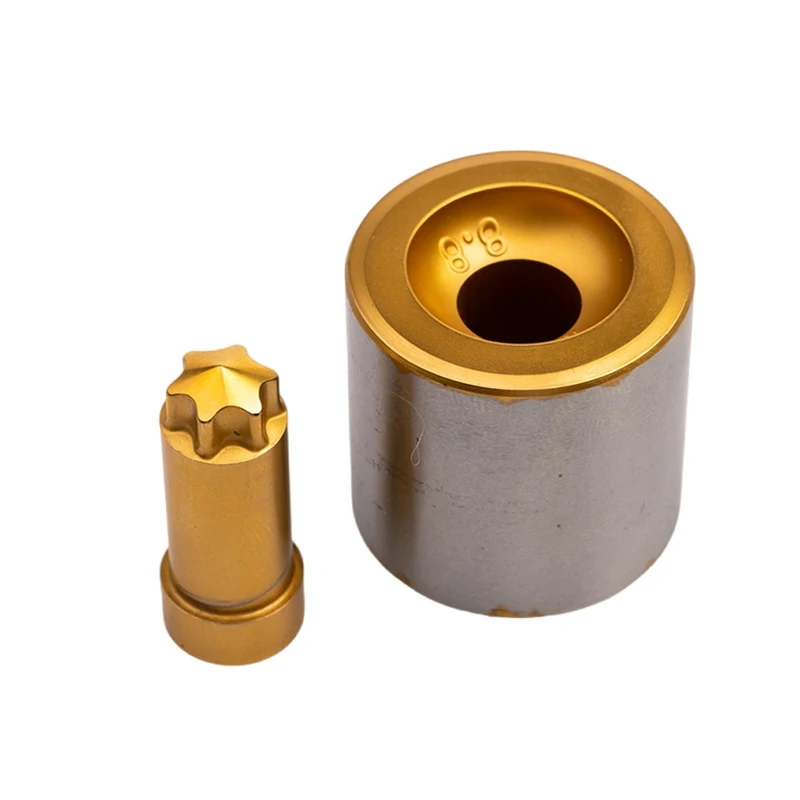
Carbide punches offer vastly superior wear resistance compared to regular options like high-speed steel or tool steel punches, primarily due to their extreme hardness and unique composite structure. This exceptional resistance to abrasive wear, galling, and deformation translates into significantly extended tool life, reduced downtime, consistent part quality, and lower overall production costs, making carbide the definitive choice for demanding cold heading and stamping applications where longevity is paramount.
In the relentless world of manufacturing, where tools are constantly subjected to friction, impact, and abrasive forces, wear resistance is a non-negotiable quality. For punches – the workhorses that shape, cut, and form countless parts – their ability to resist wear directly dictates production efficiency, part quality, and ultimately, profitability. When comparing carbide punches to their “regular” counterparts, typically made from various grades of tool steel, the difference in wear resistance is not just incremental; it’s transformative. Let’s delve into why carbide punches stand head and shoulders above the rest in the battle against wear.
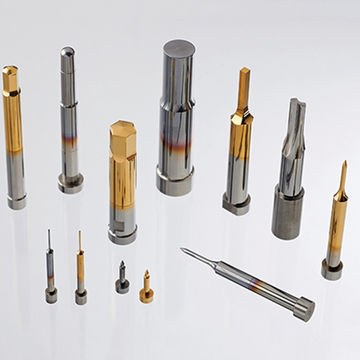
Table of Contents
- What Defines Wear Resistance in Punches?
- How Do Carbide Punches Achieve Superior Hardness and Wear Resistance?
- What Are the Primary Modes of Wear and How Do Punches Resist Them?
- How Does Material Being Punched Affect Wear Resistance Requirements?
- What Are the Real-World Benefits of Superior Wear Resistance in Carbide Punches?
- How Does XILUO Engineer Punches for Maximum Wear Resistance?
1. What Defines Wear Resistance in Punches?
Wear resistance in punches is their inherent ability to resist material loss or degradation from friction, abrasion, and impact during repeated use. Wear resistance in punches is defined by their capacity to maintain original dimensions, sharp edges, and surface integrity over extended operational cycles, despite continuous contact with workpiece materials under high pressure and dynamic forces. This critical property directly impacts tool lifespan, part quality, and overall manufacturing efficiency.
Mechanisms of Wear
Punches are subjected to several types of wear, each contributing to their degradation.
- Example 1: Abrasive Wear: This is the most common type, caused by hard particles (either from the workpiece material itself, scale, or contaminants) scratching and eroding the punch surface. Imagine sandpaper constantly rubbing against the punch. For instance, punching through a sheet of abrasive, high-carbon steel will cause significant abrasive wear.
- Example 2: Adhesive Wear (Galling): This occurs when material from the workpiece adheres to the punch surface under high pressure and friction, then tears away, taking punch material with it. This is particularly prevalent when punching sticky materials like stainless steel or aluminum.
- Example 3: Erosive Wear: Similar to abrasive wear, but caused by the impact of small particles at high velocity, often seen in high-speed operations or when forming powdered materials.
- Example 4: Fatigue Wear: Repeated stress cycles can lead to micro-cracks on the punch surface, which propagate and eventually cause material detachment.
- Theoretical Basis: Wear is a complex phenomenon influenced by material properties (hardness, toughness, surface energy), contact pressure, sliding velocity, temperature, and the presence of lubricants or abrasives.
- Practical Impacts: Understanding these wear mechanisms is crucial for selecting the right punch material and design to maximize longevity.
| Type of Wear | Description | Primary Cause | Impact on Punch |
|---|---|---|---|
| Abrasive Wear | Material removal by scratching/cutting of hard particles | Hard workpiece material, contaminants | Loss of sharp edges, dimensional change, surface roughening |
| Adhesive Wear | Material transfer/adhesion between punch and workpiece | High pressure, friction, “sticky” materials | Galling, material buildup, surface tearing |
| Erosive Wear | Material removal by impact of small particles | High-velocity particles, high-speed operations | Pitting, surface degradation |
| Fatigue Wear | Material detachment due to repeated stress cycles | Cyclic loading, stress concentrations | Cracking, chipping, spalling |
Key Properties for Wear Resistance
Certain material properties are paramount for resisting wear.
- Example 1: Hardness: This is the primary indicator of a material’s resistance to indentation and scratching. A harder punch surface is more difficult for abrasive particles to penetrate and remove material from. For instance, a punch with a hardness of 60 HRC will wear much faster than one with 90 HRA when subjected to the same abrasive forces.
- Example 2: Compressive Strength: The ability to withstand crushing forces without deforming. High compressive strength helps maintain the punch’s original shape and prevents “mushrooming” or flattening of critical features.
- Example 3: Surface Finish and Coatings: A smooth, low-friction surface reduces both abrasive and adhesive wear. Specialized coatings can further enhance surface hardness and lubricity.
- Practical Advice: When evaluating punches, consider not just the base material but also any surface treatments or coatings, as these significantly contribute to overall wear resistance. XILUO offers a range of surface treatments, including polishing, heat treatment, nitriding, and titanium plating, to optimize punch performance.
2. How Do Carbide Punches Achieve Superior Hardness and Wear Resistance?
Carbide punches achieve their vastly superior hardness and wear resistance through a unique combination of material composition and manufacturing processes that fundamentally differ from regular steel punches. Carbide punches are made from tungsten carbide particles bonded by a cobalt matrix, a composite structure that yields extreme hardness (typically 89-91 HRA) far exceeding that of even the hardest tool steels. This inherent hardness, combined with high compressive strength and a dense microstructure, allows carbide to resist abrasive wear, indentation, and plastic deformation under the most demanding conditions.
The Tungsten Carbide-Cobalt Composite
The secret lies in carbide’s unique material makeup.
- Example 1: Tungsten Carbide Grains: The primary component, tungsten carbide (WC), is an extremely hard ceramic compound. These microscopic grains are the “armor” that resists scratching and abrasion. Their crystal structure and strong covalent bonds make them inherently much harder than the iron carbides found in tool steel.
- Example 2: Cobalt Binder: These hard WC grains are held together by a metallic binder, typically cobalt. The cobalt provides crucial toughness and ductility, preventing the inherently brittle WC grains from fracturing under impact. The percentage of cobalt (e.g., 6% for high wear resistance, 12% for higher toughness) is carefully controlled to balance properties.
- Theoretical Basis: This composite structure, often referred to as a “cermet” (ceramic-metal), combines the best properties of both: the extreme hardness and wear resistance of the ceramic phase (WC) with the toughness and metallic properties of the binder phase (Co).
- Design Trade-offs: Different carbide grades are formulated by varying the WC grain size and cobalt content. Finer WC grains and lower cobalt content generally lead to higher hardness and wear resistance but reduced toughness. XILUO selects the optimal carbide grade for each punch application to balance these properties.
| Material Type | Primary Hardening Mechanism | Typical Hardness (HRC/HRA) | Wear Resistance (Relative) |
|---|---|---|---|
| Tool Steel | Heat-treated martensite, alloy carbides | 60-64 HRC | Good |
| Carbide | Tungsten carbide grains in cobalt matrix | 89-91 HRA | Excellent |
Manufacturing Process and Microstructure
The way carbide is made also contributes to its superior wear resistance.
- Example 1: Powder Metallurgy and Sintering: Carbide punches are produced via powder metallurgy. WC and cobalt powders are mixed, pressed into a “green” compact, and then sintered at very high temperatures. This process creates a fully dense material with a uniform distribution of hard WC grains, resulting in a microstructure that is highly resistant to wear.
- Example 2: Dense, Fine-Grained Structure: The controlled sintering process yields a very dense, fine-grained microstructure in carbide. This lack of porosity and fine grain size further enhances its resistance to abrasive wear and prevents crack initiation, contributing to its exceptional longevity.
- Practical Advice: The quality of the carbide itself is paramount. XILUO uses high-quality carbide grades and employs advanced sintering processes to ensure their punches have the optimal microstructure for maximum wear resistance and performance.
3. What Are the Primary Modes of Wear and How Do Punches Resist Them?
Punches face a gauntlet of destructive forces, and their ability to resist these specific modes of wear directly determines their lifespan. Punches primarily resist abrasive wear through high hardness, adhesive wear (galling) through smooth surfaces and low friction, and fatigue wear through optimized material toughness and design. Carbide punches excel in resisting all these modes due to their inherent hardness, high compressive strength, and the ability to maintain precise geometry under extreme conditions, significantly outperforming regular steel options.
Resisting Abrasive Wear
Abrasive wear is the most common and destructive form of wear for punches.
- Example 1: High-Hardness Carbide: When punching abrasive materials like high-strength steel or stainless steel, the extreme hardness of carbide (89-91 HRA) makes it incredibly difficult for the workpiece material to scratch or erode the punch surface. This allows carbide punches to maintain their sharp cutting edges and precise forming geometries for millions of cycles, whereas a regular tool steel punch (60-64 HRC) would quickly dull and lose its shape.
- Example 2: Surface Coatings: For both carbide and steel punches, specialized coatings like TiN (Titanium Nitride) or AlTiN can further enhance surface hardness and lubricity, providing an additional barrier against abrasive wear. XILUO offers these coatings to extend punch life even further.
- Theoretical Basis: The wear rate due to abrasion is inversely proportional to the hardness of the material. A harder material will experience less material removal.
- Practical Impacts: Superior resistance to abrasive wear means consistent part quality, fewer punch changes, and significantly reduced downtime.
| Wear Mode | How Carbide Punches Resist It | How Regular Steel Punches Resist It (Comparison) |
|---|---|---|
| Abrasive Wear | Extreme hardness (WC grains), dense microstructure | High hardness (heat-treated martensite), alloy carbides |
| Adhesive Wear | Smooth surface, low friction, chemical inertness | Good surface finish, lubrication, coatings |
| Fatigue Wear | Optimized toughness (cobalt binder), high compressive strength | High toughness, good ductility |
| Compressive Deformation | Very high compressive strength (WC grains) | High compressive strength (heat-treated steel) |
Resisting Adhesive Wear (Galling) and Fatigue
Beyond abrasion, punches must also resist material transfer and structural fatigue.
- Example 1: Galling Resistance: When punching “sticky” materials like aluminum or certain stainless steels, material can adhere to the punch, causing galling. Carbide’s dense, smooth surface and lower coefficient of friction make it inherently less prone to galling than steel. This ensures cleaner part release and prevents material buildup that could damage subsequent parts.
- Example 2: Fatigue Resistance: Repeated impact and stress cycles can lead to fatigue failure. While carbide is generally more brittle than steel, specific carbide grades with higher cobalt content are engineered to provide sufficient toughness to resist fatigue cracking. Additionally, XILUO’s precision manufacturing minimizes stress concentrators in the punch design, further enhancing fatigue life.
- Practical Advice: Regular inspection of punches for signs of galling or micro-cracks is essential. XILUO’s expertise in material selection and surface treatment allows them to provide punches optimized for specific wear challenges, ensuring maximum operational life.
4. How Does Material Being Punched Affect Wear Resistance Requirements?
The type of material being punched is a primary determinant of the wear resistance required from a punch, directly influencing the choice between carbide and regular options. The wear resistance requirements for punches escalate significantly when processing abrasive, high-strength, or work-hardening materials like stainless steel, high-carbon steel, or exotic alloys, making carbide punches indispensable for achieving acceptable tool life. Conversely, softer, less abrasive materials may allow for the use of regular tool steel punches, though carbide still offers superior longevity.
Abrasive and Hard Materials
Punching through tough or abrasive materials places extreme demands on the punch.
- Example 1: High-Carbon Steel: Punching high-carbon steel (e.g., for automotive fasteners) is significantly more abrasive than punching low-carbon steel. A regular tool steel punch will experience rapid wear, leading to frequent changes. A carbide punch, however, will maintain its cutting edge and form for a much longer duration, making it the economical choice for high-volume production.
- Example 2: Stainless Steel: Stainless steel is not only hard but also prone to work-hardening and galling. A regular steel punch will quickly wear, gall, and potentially seize. Carbide punches, with their superior hardness and resistance to adhesion, are essential for punching stainless steel efficiently and consistently.
- Theoretical Basis: The hardness difference between the punch and the workpiece material is a key factor in abrasive wear. The greater the difference (punch harder than workpiece), the lower the wear rate.
- Practical Impacts: For manufacturers dealing with challenging materials, carbide punches are not just an upgrade; they are often a necessity to maintain production and quality standards.
| Workpiece Material | Abrasiveness/Hardness | Recommended Punch Material | Typical Punch Life (Relative) |
|---|---|---|---|
| Aluminum, Brass | Low | Tool Steel / Carbide | Good / Excellent |
| Low Carbon Steel | Moderate | Tool Steel / Carbide | Moderate / Very Good |
| Medium Carbon Steel | High | Carbide (preferred) | Short / Excellent |
| High Carbon Steel | Very High | Carbide (essential) | Very Short / Exceptional |
| Stainless Steel | Extreme | Carbide (essential) | Extremely Short / Exceptional |
| Exotic Alloys | Extreme | Carbide (essential) | Minimal / Exceptional |
Softer or Less Demanding Materials
For certain applications, regular punches might suffice, but carbide still offers benefits.
- Example 1: Aluminum or Soft Copper: When punching very soft materials, the wear on the punch is minimal. In these cases, a high-quality tool steel punch might offer sufficient lifespan at a lower initial cost. However, even here, a carbide punch would last significantly longer, potentially reducing tool changes to almost zero over the product’s lifetime.
- Example 2: Low-Volume Production: For custom jobs or very low-volume production runs where the total number of parts is small, the extended lifespan of a carbide punch might not be fully utilized, making the lower initial cost of a steel punch more attractive.
- Practical Advice: XILUO’s engineering team can help assess your specific application, considering the workpiece material, production volume, and desired tool life, to recommend the most cost-effective and wear-resistant punch solution.
5. What Are the Real-World Benefits of Superior Wear Resistance in Carbide Punches?
The superior wear resistance of carbide punches translates into a cascade of tangible real-world benefits that significantly impact manufacturing efficiency, product quality, and overall profitability. The primary benefits of superior wear resistance in carbide punches include dramatically extended tool life (10-30x longer than steel), leading to significantly reduced machine downtime for tool changes, lower total tooling costs over time, consistent production of high-quality parts within tight tolerances, and minimized scrap rates. These advantages collectively boost productivity and reduce operational expenses.
Extended Tool Life and Reduced Downtime
This is the most direct and impactful benefit.
- Example 1: High-Volume Fastener Production: In a cold heading machine producing millions of fasteners annually, a regular steel punch might need to be replaced every few hundred thousand cycles. A carbide punch, however, could last for several million cycles. This means fewer interruptions for tool changes, leading to significantly higher machine uptime and production output.
- Example 2: Complex Stamping Dies: For intricate stamping operations, punch wear can quickly lead to burrs or dimensional inaccuracies. Carbide punches maintain their sharp edges and precise forms for much longer, reducing the frequency of die maintenance and regrinding.
- Theoretical Basis: Tool life is inversely proportional to the wear rate. Lower wear rate means longer life.
- Practical Impacts: Reduced downtime directly translates to increased revenue and lower labor costs associated with tool changes and machine setup.
| Benefit Category | Impact of Superior Wear Resistance (Carbide vs. Regular) |
|---|---|
| Tool Life | 10-30x longer |
| Downtime | Significantly reduced (fewer tool changes) |
| Tooling Costs | Lower total cost of ownership (despite higher initial cost) |
| Part Quality | Consistent, high precision, fewer defects |
| Scrap Rate | Minimized |
| Maintenance | Reduced frequency of regrinding/replacement |
| Production Output | Increased due to higher uptime |
Consistent Part Quality and Lower Costs
Wear resistance directly impacts the quality of the manufactured parts and the overall cost structure.
- Example 1: Dimensional Accuracy: As a punch wears, its dimensions change, leading to out-of-spec parts. Carbide punches maintain their precise geometry for much longer, ensuring consistent production of parts within tight tolerances, reducing the need for quality control checks and rework.
- Example 2: Reduced Scrap: Worn punches produce burrs, incomplete forms, or other defects that result in scrapped parts. By resisting wear, carbide punches minimize these defects, leading to a higher first-pass yield and significant material savings.
- Example 3: Lower Total Cost of Ownership (TCO): While carbide punches have a higher initial cost, their extended lifespan and the associated reductions in downtime, labor, and scrap often result in a significantly lower TCO compared to regular steel punches.
- Practical Advice: When evaluating punch options, always consider the long-term benefits of wear resistance. XILUO’s carbide punches, while a higher initial investment, offer a superior return on investment through their extended lifespan and the resulting operational efficiencies and cost savings.
6. How Does XILUO Engineer Punches for Maximum Wear Resistance?
XILUO (Dongguan Xiluo Mold Technology Co., Ltd.) is a leader in engineering punches for maximum wear resistance, leveraging decades of expertise, advanced materials, and cutting-edge manufacturing processes. XILUO engineers punches for maximum wear resistance through a multi-faceted approach: selecting premium imported tool steels (e.g., DC53, D55) or high-grade tungsten carbide, employing precise heat treatment and sintering processes, utilizing advanced CNC machining for optimal geometry and surface finish, and applying specialized surface coatings. This comprehensive strategy, backed by over 24 years of experience and rigorous quality control, ensures superior durability and extended tool life for all applications.
Strategic Material Selection and Processing
The foundation of XILUO’s wear-resistant punches lies in its material expertise.
- Example 1: High-Performance Tool Steels: For applications where tool steel is appropriate, XILUO uses only high-quality imported grades like DC53 and D55. These steels are chosen for their excellent balance of hardness, toughness, and wear resistance. Their in-house heat treatment processes are meticulously controlled to achieve optimal microstructure, maximizing the steel’s inherent wear resistance.
- Example 2: Premium Tungsten Carbide Grades: For ultimate wear resistance, XILUO utilizes carefully selected tungsten carbide grades with optimized cobalt content and grain size. Their advanced sintering processes ensure a dense, uniform, and defect-free microstructure, which is critical for carbide’s exceptional hardness and wear properties.
- Theoretical Basis: XILUO’s deep understanding of metallurgy and material science allows them to precisely match the material properties to the specific wear mechanisms expected in the application.
- Practical Impacts: This strategic material selection ensures that every XILUO punch starts with the best possible foundation for resisting wear.
| XILUO Wear Resistance Factor | How it Contributes to Punch Longevity |
|---|---|
| 24+ Years Expertise | Optimized material selection, design, and process control for wear |
| Premium Materials | Inherent high hardness, toughness, and resistance to abrasion/galling |
| Advanced Manufacturing | Precision geometry, superior surface finish, reduced stress points |
| Precision Heat Treatment | Maximizes steel hardness/toughness; optimizes carbide microstructure |
| Surface Coatings | Adds extra layer of hardness, lubricity, and chemical inertness |
| Rigorous QC | Ensures consistency, prevents defects that accelerate wear |
| Customization (OEM/ODM) | Tailored solutions for specific wear challenges and materials |
Advanced Manufacturing and Surface Enhancement
Beyond the base material, XILUO’s manufacturing prowess further boosts wear resistance.
- Example 1: Precision Machining and Polishing: XILUO’s 10,000 square meter facility, equipped with over 200 sets of advanced processing equipment, ensures that punches are machined to extremely tight tolerances and achieve a superior surface finish. A highly polished surface reduces friction, minimizes galling, and prevents stress concentrations, all of which contribute to extended wear life.
- Example 2: Specialized Surface Treatments: XILUO offers a range of surface treatments, including nitriding and various PVD/CVD coatings (e.g., TiN, TiCN, AlTiN). These coatings create an ultra-hard, low-friction layer on the punch surface, significantly enhancing its resistance to abrasive and adhesive wear, especially in demanding applications or when processing difficult materials.
- Practical Advice: XILUO’s commitment to quality is evident in its rigorous multi-stage quality control, utilizing advanced testing equipment like profile projectors and secondary element measuring machines. This ensures that every punch meets the highest standards for material integrity, dimensional accuracy, and surface quality, guaranteeing maximum wear resistance and consistent performance for their global clientele.
Conclusion
In the critical comparison of wear resistance, carbide punches definitively outperform regular options like tool steel punches. Their unique composite structure of tungsten carbide and cobalt provides extreme hardness, high compressive strength, and a dense microstructure that offers unparalleled resistance to abrasive wear, adhesive wear (galling), and fatigue. This superior wear resistance translates directly into dramatically extended tool life, significantly reduced machine downtime, consistent production of high-quality parts, and a lower total cost of ownership.
XILUO (Dongguan Xiluo Mold Technology Co., Ltd.) stands as a leader in engineering punches for maximum wear resistance. With over 24 years of specialized expertise, a robust R&D team, and a commitment to utilizing premium imported materials, advanced manufacturing processes, and specialized surface treatments, XILUO delivers punches that consistently exceed expectations. Whether your application demands the ultimate in wear resistance from carbide or optimized performance from high-quality tool steel, XILUO provides tailored, durable, and high-precision solutions that enhance your production efficiency and product quality.