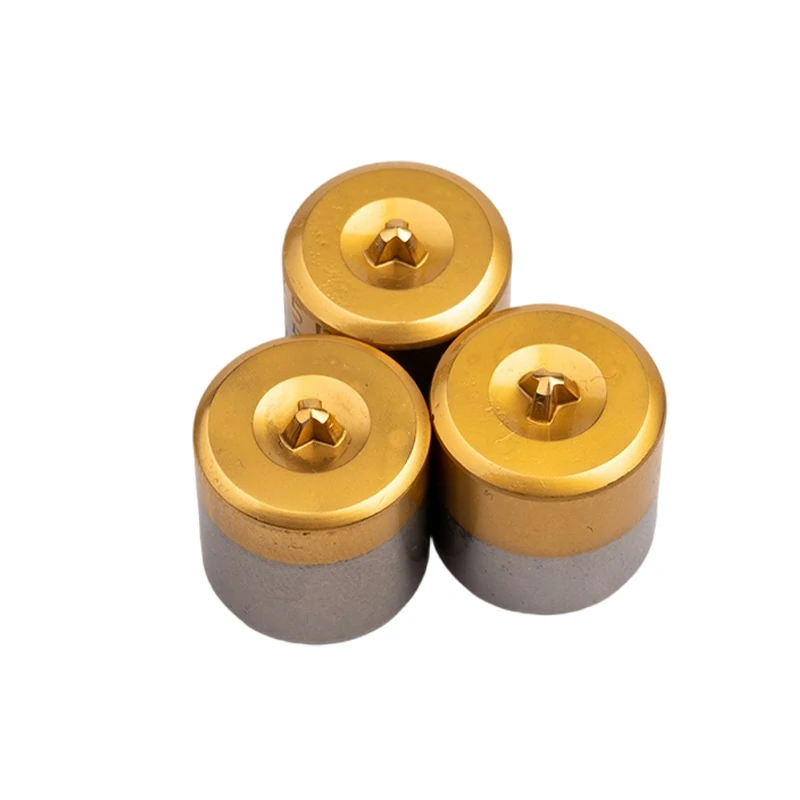
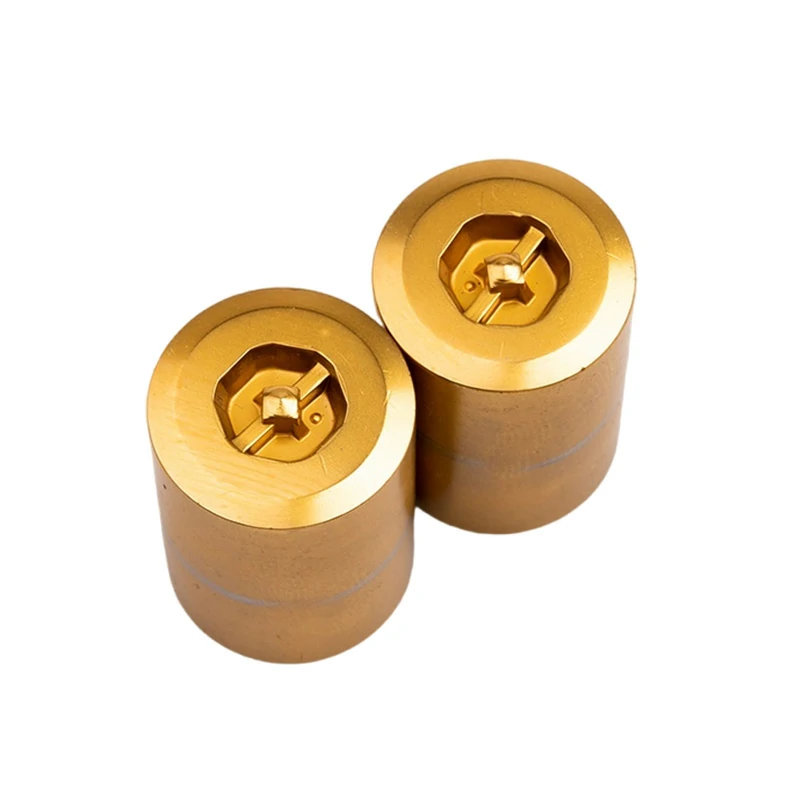
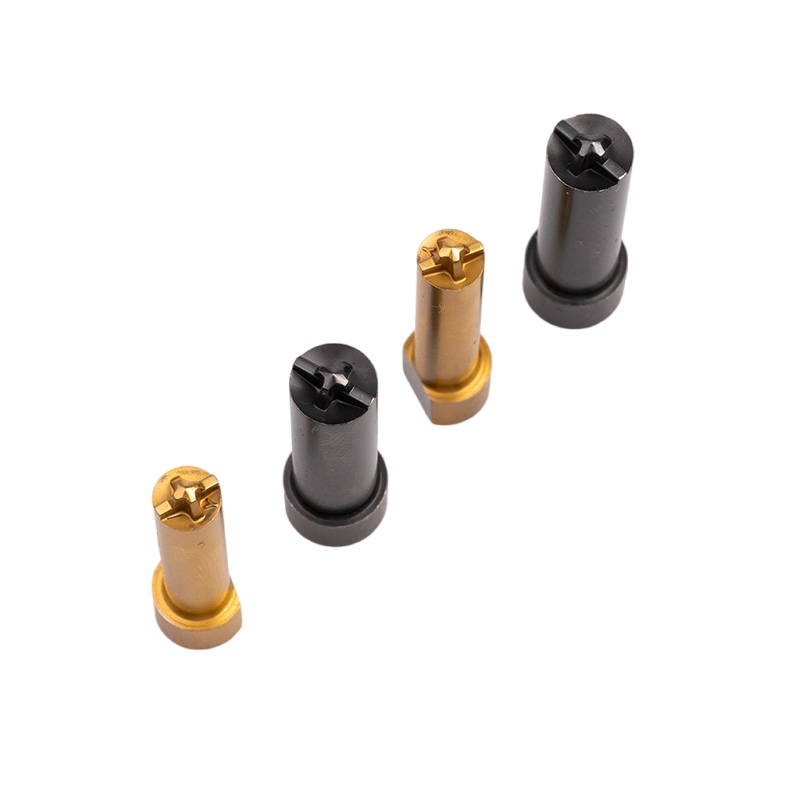
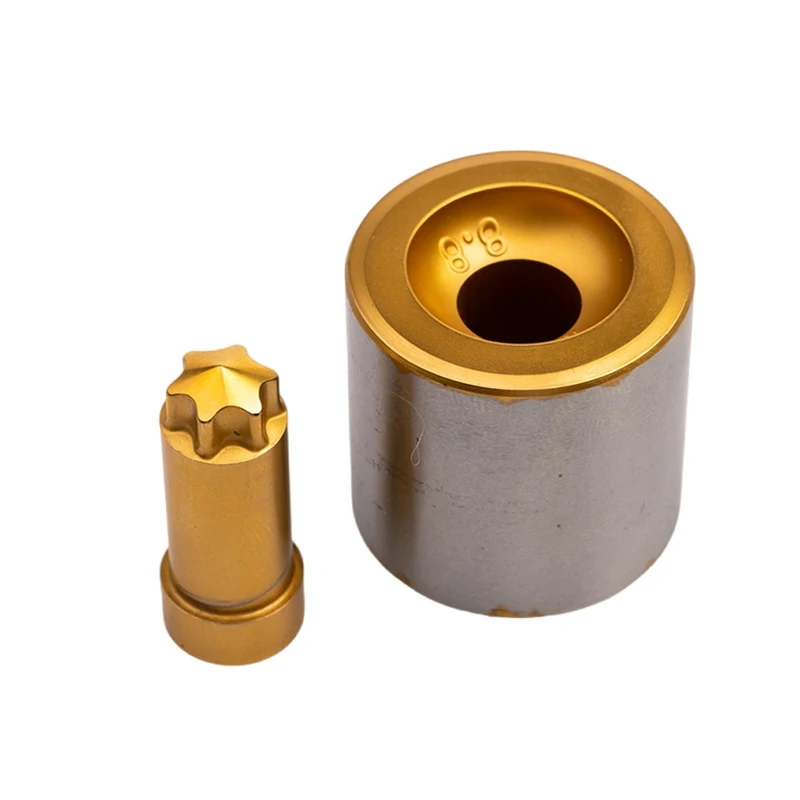
The great difference between thread rolling dies and flat dies lies in their fundamental mechanism and ideal application. Flat dies consist of two reciprocating (sliding) plates, making them exceptionally fast and cost-effective for mass-producing standard fasteners like screws and bolts. In contrast, circular (or rotary) dies use two or three rotating cylindrical tools, offering superior precision, longer tool life, and the versatility to create complex, high-strength threads for critical industries like aerospace and automotive. The choice is not about which is inherently better, but which is perfectly suited to your specific production volume, precision requirements, and part geometry.

In the world of high-performance manufacturing, creating strong, reliable threads is paramount. Thread rolling, a cold-forming process that displaces material rather than cutting it, stands out as the superior method for producing threads with enhanced strength and fatigue resistance. However, the success of this process hinges on selecting the right tooling. The two dominant types of tooling—flat dies and circular dies—each offer a unique set of advantages and are engineered for different manufacturing scenarios. Understanding their core differences is the first step toward optimizing your production line for efficiency, quality, and cost-effectiveness. This guide will provide an in-depth analysis to help you make an informed decision.
Table of Contents
- What is Thread Rolling? A Foundation for Understanding the Dies
- Deep Dive into Flat Dies (Reciprocating Dies)
- Exploring Circular Dies (Rotary/Cylindrical Dies)
- Head-to-Head Comparison: Flat Dies vs. Circular Dies
- Which Die is Right for Your Application? A Decision-Making Framework
- Why Your Choice of Die Manufacturer Matters: Partnering with Xiluomold
- Conclusion: Making the Optimal Choice for Peak Performance
What is Thread Rolling? A Foundation for Understanding the Dies
Before comparing die types, it’s essential to grasp the core process they facilitate. Thread rolling is not a cutting process; it’s a cold-forming manufacturing method. A hardened steel die with the negative form of a thread is pressed with extreme force onto a cylindrical blank. As the blank rolls against the die, the material is displaced to form the roots and crests of the thread. This plastic deformation realigns the grain structure of the metal, following the contour of the thread. The result is a thread that is significantly stronger, has a superior surface finish, and offers greater resistance to fatigue and stripping compared to machined (cut) threads. Both flat and circular dies achieve this, but their method of application differs dramatically.
Deep Dive into Flat Dies (Reciprocating Dies)
Flat thread rolling dies are the workhorses of the high-volume fastener industry. They are characterized by their simple yet incredibly effective design, which is optimized for speed and efficiency in producing standard threaded parts.
How Do Flat Thread Rolling Dies Work?
A flat die system consists of a pair of rectangular steel blocks. One die is stationary, while the other reciprocates, sliding back and forth. A cylindrical blank is introduced between the two dies at one end. As the moving die slides across the stationary die, it forces the blank to roll between them. The precisely machined grooves on the die faces impress the thread form onto the blank in a single pass. The finished, threaded part then exits at the opposite end. This entire cycle happens in a fraction of a second, enabling extremely high production rates.
Advantages of Using Flat Dies
- Exceptional Production Speed: The primary advantage of flat dies is their speed. Machines using flat dies can produce hundreds, or even thousands, of parts per minute, making them ideal for mass production of items like standard screws, bolts, and other fasteners.
- Cost-Effectiveness: Both the dies themselves and the machinery they run on are generally less expensive than their circular counterparts. This lower initial investment makes them accessible and provides a quick return on investment for high-volume jobs.
- Simpler Setup and Maintenance: Setting up a flat die thread roller is typically faster and requires less specialized skill than setting up a circular die machine. This reduces downtime between jobs and simplifies ongoing maintenance.
Limitations and Considerations for Flat Dies
- Limited Thread Length: The maximum length of the thread is directly limited by the length of the dies themselves. They are not suitable for producing long threaded rods or lead screws.
- Lower Die Life: The reciprocating motion and the abrupt start/stop impact at the beginning of each cycle create significant wear and tear. Consequently, flat dies generally have a shorter operational life than circular dies.
- Part-to-Part Consistency: While excellent for standard tolerances, the nature of the process can sometimes introduce minor inconsistencies or a slight “drunken thread” at the start, which may not be acceptable for high-precision applications.
Exploring Circular Dies (Rotary/Cylindrical Dies)
Circular dies, also known as rotary or cylindrical dies, represent a more advanced and versatile approach to thread rolling. They are the preferred choice for applications where precision, strength, and complexity are non-negotiable.
How Do Circular Thread Rolling Dies Work?
Circular die systems use either two or three cylindrical dies that rotate in sync. The blank is fed between these rotating dies. The gradual, controlled pressure applied by the rotating dies forms the thread onto the blank. There are two primary modes of operation:
- In-feed (Plunge) Rolling: The blank is fed to a specific depth between the dies, which then move inward to form the thread along a fixed length. This is used for parts like headed bolts or parts with shoulders where the thread does not run to the end.
- Through-feed Rolling: The blank is fed axially through the dies. This method allows for the creation of threads of virtually unlimited length, making it perfect for threaded rods, worm gears, and lead screws.
The Unmistakable Advantages of Circular Dies
- Superior Die Life and Durability: The rotational motion is much smoother than the reciprocating action of flat dies. This even distribution of force significantly reduces wear, leading to a much longer tool life and more consistent performance over time.
- Exceptional Precision and Concentricity: Circular dies provide unparalleled control over the forming process, resulting in highly accurate and concentric threads. This makes them essential for aerospace, automotive, medical, and other high-specification industries.
- Versatility in Application: The ability to perform both in-feed and through-feed rolling opens up a vast range of possibilities, from standard bolts to complex, long-threaded components and special forms that are impossible to create with flat dies.
- Ideal for Harder Materials: The gradual application of force in a circular die system is better suited for rolling threads on tougher, high-tensile materials and exotic alloys without causing material fatigue.
Drawbacks and When to Reconsider Circular Dies
- Higher Initial Cost: The complexity of both the dies and the machinery results in a significantly higher initial investment compared to flat die systems.
- Complex Setup: Achieving the perfect setup for a circular thread roller requires a higher level of operator skill and more time. The precise synchronization and pressure settings are critical for quality output.
- Slower Production Rates (for simple parts): For producing simple, short-length fasteners, a circular die machine cannot match the sheer output speed of a flat die machine.
Head-to-Head Comparison: Flat Dies vs. Circular Dies
To summarize the key distinctions, this table provides a clear, at-a-glance comparison of the two thread rolling die types.
| Feature | Flat Dies (Reciprocating) | Circular Dies (Rotary) |
|---|---|---|
| Mechanism | Two dies slide (reciprocate) against each other. | Two or three cylindrical dies rotate in sync. |
| Production Speed | Extremely High (up to thousands of parts/minute). | Moderate to High (slower for simple parts, but continuous for through-feed). |
| Setup Time | Relatively short and simple. | Longer and more complex, requiring skilled operators. |
| Die Life | Shorter due to high impact and wear. | Significantly Longer due to smooth, rotational force. |
| Tooling & Machine Cost | Lower initial investment. | Higher initial investment. |
| Thread Length Capability | Limited by the physical length of the die. | Virtually unlimited with through-feed method. |
| Precision & Quality | Good for standard commercial fasteners. | Exceptional for high-tolerance, critical applications. |
| Typical Applications | Standard screws, bolts, self-tapping screws. | Aerospace fasteners, automotive studs, lead screws, worm gears, high-strength bolts. |
Which Die is Right for Your Application? A Decision-Making Framework
Choosing between flat and circular dies requires a careful evaluation of your project’s specific needs. Ask yourself the following questions to guide your decision.
Analyzing Your Production Volume
Is your goal to produce millions of identical, standard-sized screws per month? If so, the unmatched speed and lower cost of a flat die system make it the clear winner. The economy of scale in mass production heavily favors this method.
Evaluating Precision and Quality Requirements
Does your component need to meet stringent aerospace or automotive standards like AS8879 or ISO 898-1? If the thread requires perfect concentricity, flawless form, and zero tolerance for error, then the superior control and quality of circular dies are mandatory.
Considering Part Geometry and Material
Are you producing threaded rods that are several feet long? You need the through-feed capability of a circular die system. Are you working with tough materials like Inconel or titanium alloys? The gradual forming pressure of circular dies is better suited to these demanding materials. For short, standard bolts made from mild steel, flat dies are perfectly adequate.
Budget and Total Cost of Ownership
While flat dies offer a lower upfront cost, it’s crucial to consider the total cost of ownership (TCO). For jobs that require high precision, using a flat die may result in higher scrap rates. Furthermore, the longer life of circular dies can make them more cost-effective over millions of cycles, despite the higher initial investment. Analyze the balance between initial capital outlay and long-term operational costs.
Why Your Choice of Die Manufacturer Matters: Partnering with Xiluomold
The performance of your thread rolling operation is only as good as the quality of your dies. A poorly made die, regardless of type, will lead to premature failure, inconsistent parts, and costly downtime. This is where expertise in die manufacturing becomes critical. At Xiluomold, we bring decades of experience to the table, demonstrating unparalleled expertise, authoritativeness, and trustworthiness in the field.
We understand the science behind die performance. Our process involves:
- Advanced Material Selection: We utilize high-grade tool steels like D2, M2, and specialized powdered metals, selecting the optimal material based on your application’s wear resistance and toughness requirements.
- Precision Grinding and Machining: Our state-of-the-art CNC grinding and EDM machines ensure that every die face and thread form is manufactured to sub-micron tolerances, guaranteeing thread accuracy.
- Expert Heat Treatment: We employ proprietary heat treatment and surface coating processes (like TiN or CrN) to maximize die hardness and lubricity, drastically extending tool life.
Whether you need high-speed flat dies for commercial production or ultra-precise circular dies for mission-critical components, Xiluomold is your trusted partner. We work with you to engineer the perfect tooling solution for your specific needs. Contact our engineering team today to discuss your project.
Conclusion: Making the Optimal Choice for Peak Performance
In summary, the great difference between flat and circular thread rolling dies is a story of specialization. Flat dies are champions of speed and efficiency, perfectly designed for the high-volume world of standard fasteners. Circular dies are masters of precision and versatility, engineered for the demanding requirements of high-strength, complex, and critical components. There is no single “best” choice—only the optimal choice for your application. By carefully considering your production volume, quality standards, part geometry, and budget, you can select the right die technology to unlock maximum performance and profitability in your manufacturing operations.