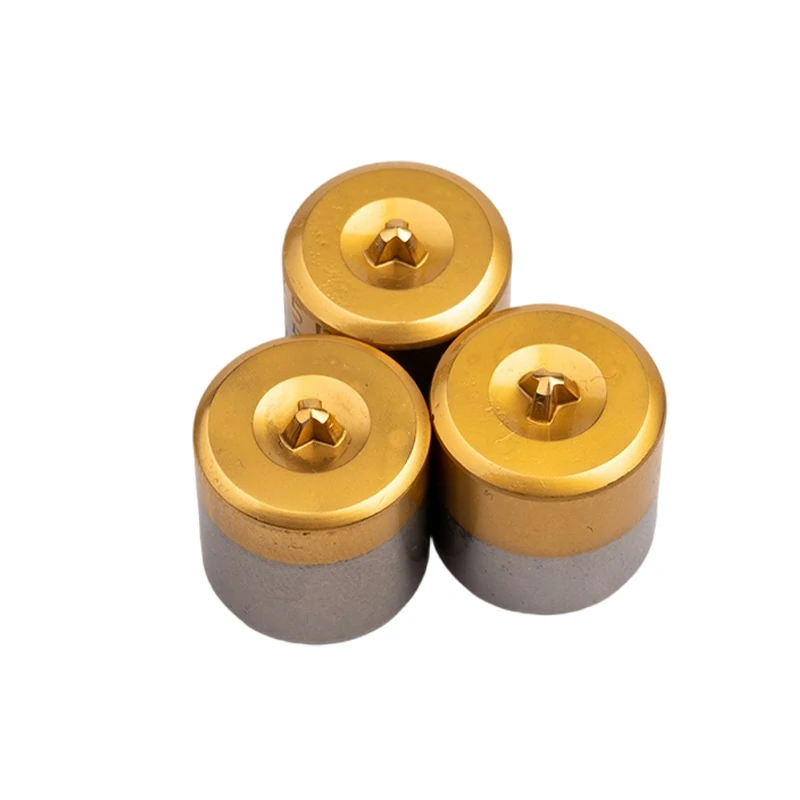
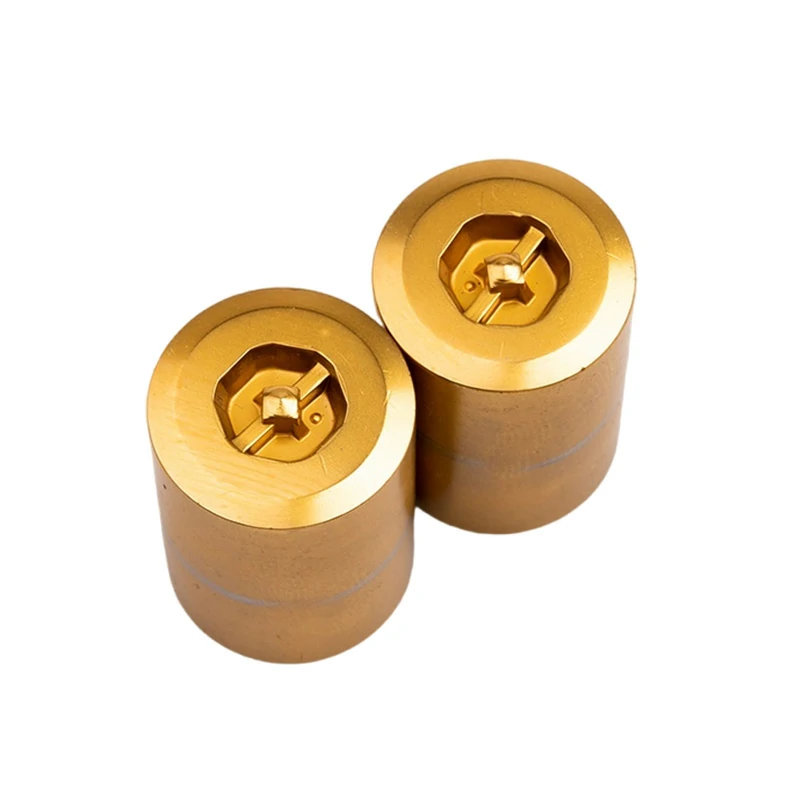
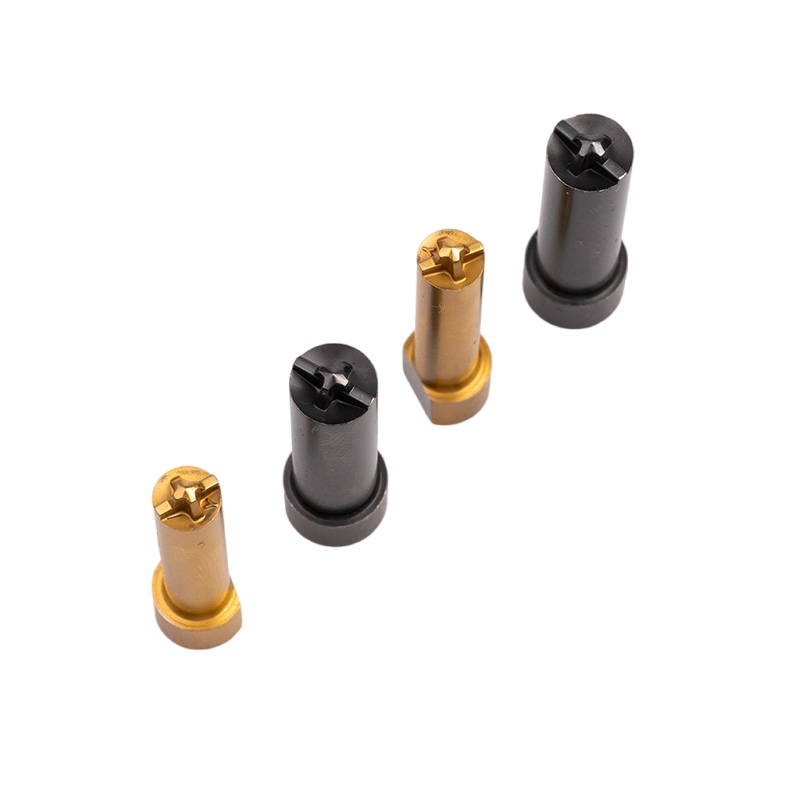
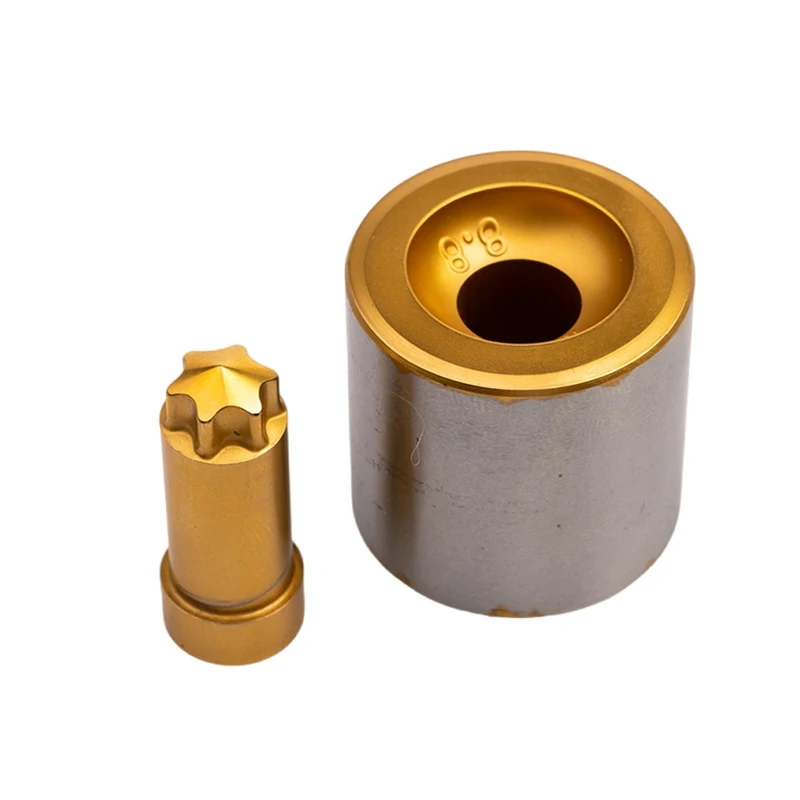
The key difference between a pin punch and a standard punch, especially in the context of precision mold making and tooling, lies in their fundamental purpose and design. A pin punch is primarily used to transmit force for tasks like ejection, alignment, or creating core features without fundamentally altering the workpiece’s shape, often exemplified by ejector pins or core pins. In contrast, a standard punch (more accurately a pierce or forming punch) is engineered to actively modify the workpiece by shearing, piercing, forming, or blanking material through high-impact force. Understanding this distinction is critical for designing robust molds, ensuring part quality, and maximizing the operational life of your tooling.
While both are essential components in the world of tool and die making, their application, geometry, and material properties are distinctly different. Choosing the wrong component can lead to premature tool failure, poor part quality, and costly downtime. At Xiluo Mold, we specialize in manufacturing high-precision mold components, and this guide will provide an in-depth, expert look at these two critical tool types to help you make informed decisions for your manufacturing process.
Table of Contents
- What is a Pin Punch in the Context of Mold Making?
- Deconstructing the ‘Standard Punch’: Piercing, Forming, and More
- At-a-Glance Comparison: Pin Punch vs. Standard Punch
- How Do You Select the Right Punch for Your Tooling?
- Beyond the Basics: The Role of Customization and Coatings
- Partnering with an Expert: The Xiluo Mold Advantage
- Frequently Asked Questions (FAQ)
What is a Pin Punch in the Context of Mold Making?
In the precision manufacturing industry, the term “pin punch” is a broad category. For mold makers and tool designers, it most accurately refers to components like ejector pins, core pins, and guide pins. Their primary role isn’t to cut or deform, but to facilitate the molding process through precise movement and positioning. They are the workhorses that ensure a molded part can be cleanly removed or that intricate internal features are perfectly formed.
Think of a pin punch as a component designed for force transmission and guidance. An ejector pin, for example, pushes against the solidified plastic part to eject it from the mold cavity after the cycle is complete. A core pin extends into the mold cavity to create a hole or hollow section in the final part. In all these cases, the pin must withstand compressive forces, high temperatures (in injection molding), and repeated cycling without bending, breaking, or wearing down.
Key Characteristics of a Pin Punch
- Geometry: Typically a long, straight, cylindrical shaft. The head is designed to be pushed by the ejector plate, and the tip is precisely ground to match the contour of the part it contacts.
- Hardness & Toughness: They require a good balance. They need to be hard enough on the surface to resist wear and indentation (often nitrided to 65-70 HRC on the surface) but must have a softer, tougher core (around 40-45 HRC) to absorb the compressive stress of ejection without snapping.
- Material: Common materials include nitrided tool steels like SKD61 (or H13), which offer excellent heat resistance and toughness, making them ideal for the high-temperature environment of injection molding.
- Surface Finish: A very smooth, polished surface (low Ra value) is essential to prevent the plastic part from sticking to the pin and to reduce friction during movement.
Common Applications in Injection Molds and Dies
The function of a pin punch is defined by its application within the tool. In the world of mold components, their names reflect their jobs:
- Ejector Pins: The most common type, used to push the finished part out of the mold.
- Core Pins: Used to create holes, bosses, or other detailed features within the molded part. They are part of the stationary mold half and must withstand the injection pressure of molten plastic.
- Guide Pins: Ensure the precise alignment of the two halves of a mold or die set, preventing misalignment that could damage the tool or create defective parts.
Deconstructing the ‘Standard Punch’: Piercing, Forming, and More
When engineers refer to a “standard punch,” they are almost always talking about a component designed for material modification. These are the tools that perform the cutting, shaping, and forming operations in stamping dies and, occasionally, in-mold trimming applications. Unlike a pin punch that gently pushes, a standard punch strikes with immense force to overcome the material’s shear strength.
These are often called pierce punches, blanking punches, or forming punches. A pierce punch, for example, is paired with a die button to shear a hole in a sheet of metal. Its cutting edge must be incredibly sharp, hard, and resistant to chipping. The primary forces acting on it are compressive force along its axis and abrasive wear along its cutting edges. Its design is entirely focused on delivering a clean cut and surviving millions of high-impact cycles.
Key Characteristics of a Standard Punch
- Geometry: The business end features a sharp, precisely ground cutting edge. The body must be perfectly straight and concentric to align with the die. The head is robustly designed to withstand repeated, high-impact blows from a press.
- Hardness & Wear Resistance: These punches prioritize extreme hardness (typically 60-64 HRC through-hardened) and wear resistance. Chipping and dulling are the primary failure modes.
- Material: High-speed steels (HSS) like SKH51 (M2) or even more advanced powder metallurgy steels (e.g., ASP23) and solid tungsten carbide are used. These materials can maintain their hardness and sharp edge under the intense heat and pressure of high-speed punching.
- Clearance: The performance of a standard punch is critically dependent on the clearance—the small gap between the punch and the die. This is a precisely calculated value that determines the quality of the cut.
Common Applications in Stamping Dies and Molds
Standard punches are the primary actors in metal stamping and forming operations:
- Piercing/Punching: Creating holes in a workpiece.
- Blanking: Cutting the outer profile of a part from a larger sheet of material.
- Forming/Bending: Shaping the material into a three-dimensional form without cutting it.
- Coining: Compressing the material in a confined space to impart fine details.
At-a-Glance Comparison: Pin Punch vs. Standard Punch
To clarify the differences, this table provides a direct, side-by-side comparison based on key engineering attributes relevant to mold and die making.
| Feature | Pin Punch (e.g., Ejector/Core Pin) | Standard Punch (e.g., Pierce Punch) |
|---|---|---|
| Primary Function | Force transmission, ejection, alignment, core forming. Does not cut material. | Material modification, piercing, shearing, forming. Actively cuts or shapes material. |
| Key Design Goal | Resist bending, heat, and compression over many cycles. | Maintain a sharp cutting edge and resist high-impact shock and abrasive wear. |
| Typical Hardness Profile | High surface hardness (nitrided ~65-70 HRC) with a tougher, softer core (~40-45 HRC). | Through-hardened to a high, uniform hardness (e.g., 60-64 HRC for HSS). |
| Common Materials | SKD61 (H13), 65Mn. Materials selected for toughness and heat resistance. | SKH51 (M2), ASP23, Tungsten Carbide (WC). Materials selected for extreme wear resistance. |
| Primary Failure Mode | Bending, mushrooming of the head, or gradual wear on the tip. | Chipping of the cutting edge, dulling, or catastrophic fracture from impact. |
| Primary Application | Plastic Injection Molding, Die Casting. | Metal Stamping, Progressive Dies, Fineblanking. |
How Do You Select the Right Punch for Your Tooling?
Choosing between a pin punch and a standard punch is usually straightforward based on the operation. However, selecting the specific type of pin or punch requires a deeper analysis of the application. The success of your entire manufacturing operation can hinge on this choice.
Material Selection: Balancing Hardness, Toughness, and Wear Resistance
The first question should always be: what material will this component interact with, and under what conditions?
- For Injection Molding (Pin Punches/Ejector Pins): The primary challenge is heat. Molten plastic can be 200-300°C. SKD61 (H13) is the industry standard because its hot-work properties allow it to maintain strength and hardness at elevated temperatures. A nitrided surface provides the necessary wear resistance against filled plastics.
- For High-Speed Stamping (Standard Punches): The challenge is impact and abrasion. SKH51 (M2) high-speed steel offers a great balance of hardness and toughness for punching mild steels. For punching abrasive materials like stainless steel or for extremely long production runs, upgrading to powder metallurgy steels (like ASP23) or solid Tungsten Carbide provides significantly longer tool life, justifying the higher initial cost.
Why Geometry and Tolerance Are Non-Negotiable
Precision is paramount. For both types of components, tight tolerances on diameter, concentricity, and straightness are critical. For a core pin, any deviation can result in inconsistent wall thickness in the part. For a pierce punch, poor concentricity between the tip and shank can lead to uneven loading, premature chipping, and burrs on the stamped part. At Xiluo Mold, our manufacturing processes, including CNC grinding and wire EDM, ensure tolerances as tight as ±0.001mm, guaranteeing perfect fit and function.
Application-Specific Needs: Injection Molding vs. Stamping
Consider the complete operational context. An ejector pin in a high-volume medical mold requires not only precision but also a flawless, highly polished surface to prevent any micro-scratches on the part and ensure cleanroom compliance. A pierce punch in a progressive stamping die for automotive parts must be designed with specific head configurations to withstand millions of off-center impacts. You must consider the forces at play, the cycle times, and the quality requirements of the final product.
Beyond the Basics: The Role of Customization and Coatings
Standard, off-the-shelf components are not always the answer. Complex part geometries often require custom-shaped core pins or forming punches. Furthermore, advanced surface coatings can dramatically enhance performance.
- TiN (Titanium Nitride): A good general-purpose coating that increases surface hardness and lubricity.
- TiCN (Titanium Carbonitride): Harder than TiN, offering excellent resistance to abrasive wear, making it ideal for punches used on tougher metals.
- DLC (Diamond-Like Carbon): Provides exceptional lubricity, making it a perfect choice for ejector pins in molds where sticking is an issue, or for forming punches used on non-ferrous metals like aluminum.
Working with a manufacturer like Xiluo Mold, who can provide both custom geometries and advanced coating options, allows you to engineer the perfect solution rather than settling for a standard one.
Partnering with an Expert: The Xiluo Mold Advantage
Understanding the difference between a pin punch and a standard punch is the first step. The next is sourcing components that meet the rigorous demands of modern manufacturing. This is where expertise in materials, machining, and application engineering becomes invaluable.
At Xiluo Mold, we are not just a supplier; we are a partner in your tooling success. We leverage state-of-the-art CNC grinding, high-speed milling, and EDM technology to produce a wide range of precision mold components, including:
- Custom Ejector Pins and Core Pins
- High-Precision Pierce and Forming Punches
- Guide Elements and Die Inserts
Our deep understanding of materials like SKD61, SKH51, and Tungsten Carbide, combined with rigorous quality control, ensures every component we deliver provides optimal performance and longevity. Whether you need a heat-resistant core pin for a complex injection mold or a wear-resistant pierce punch for a high-volume stamping die, our team is ready to provide the expert guidance and manufacturing excellence you require.
Frequently Asked Questions (FAQ)
1. Can I use an ejector pin as a piercing punch?
Absolutely not. An ejector pin (a type of pin punch) is designed for compressive strength and is typically made from tougher, less hard material. Using it for piercing would cause its tip to deform, mushroom, or break immediately, as it lacks the edge hardness and strength required for shearing metal.
2. What does ‘nitriding’ do for an ejector pin?
Nitriding is a heat treatment process that diffuses nitrogen into the surface of the steel. It creates an extremely hard, wear-resistant outer case (the “skin”) while leaving the inner core of the pin tougher and more ductile. This combination is ideal for ejector pins, giving them a durable surface to resist wear from plastic and a strong core to resist bending or snapping under load.
3. Why is Tungsten Carbide so expensive but sometimes necessary for standard punches?
Tungsten Carbide (WC) is a ceramic-metal composite, not a steel. It is exceptionally hard and wear-resistant, often lasting 10 to 50 times longer than standard tool steels in high-volume or abrasive stamping applications. Its high cost comes from the raw materials and the complex, energy-intensive process (sintering) required to create it. It is also more difficult to grind and shape. For extreme production runs where downtime for tool changes is very costly, the initial investment in carbide is easily justified by the massive increase in tool life.
4. How do I know which coating to choose for my punch?
The choice of coating depends on the application. For general-purpose punching with reduced friction, TiN is a good start. If you are punching abrasive materials like stainless steel, the extra hardness of TiCN is beneficial. If you are forming or working with sticky materials like aluminum, the high lubricity of a DLC or CrN coating is often the best choice. It’s always best to consult with your component manufacturer to discuss the specific details of your application.