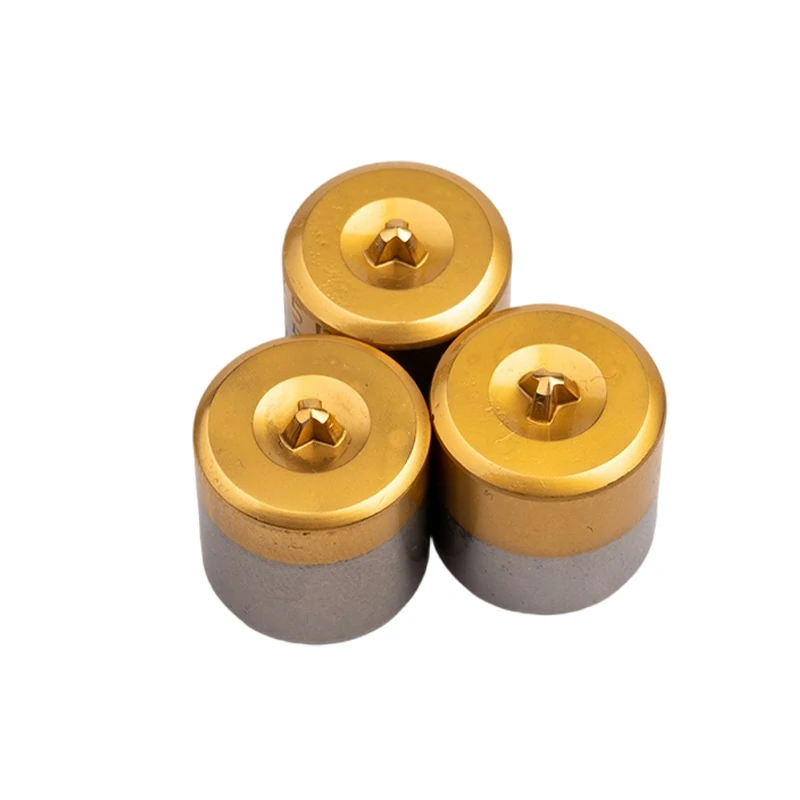
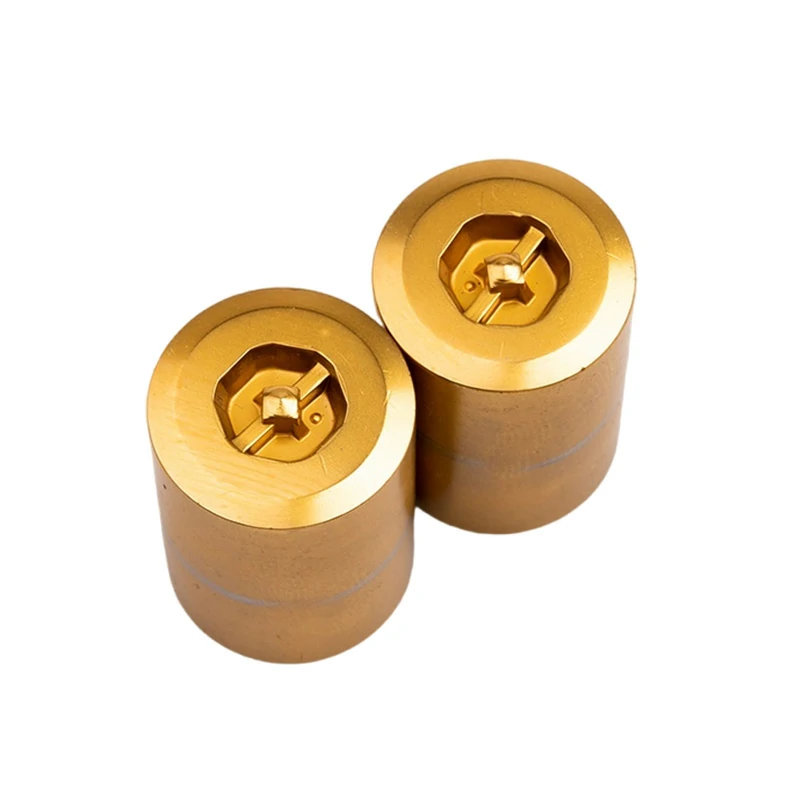
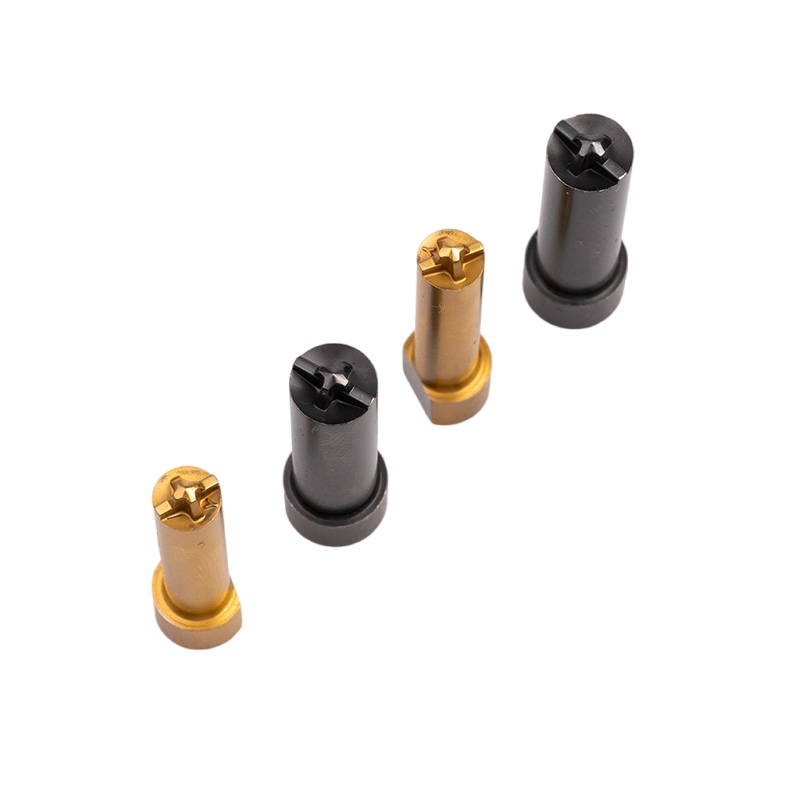
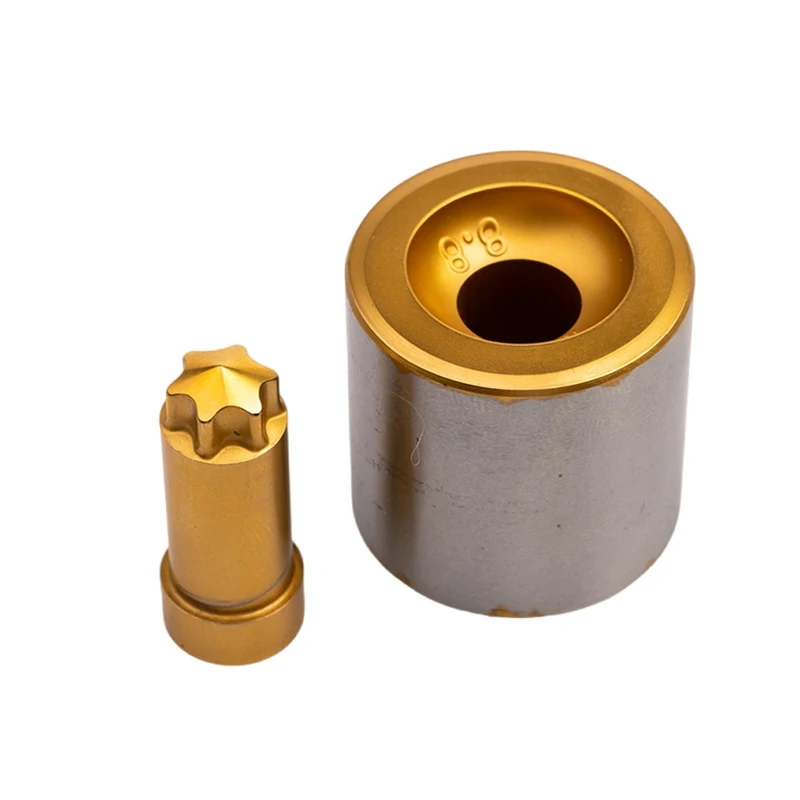
The critical factors for customizing tungsten carbide dies involve a synthesis of material science, precision engineering, and application-specific design. Key considerations include selecting the correct tungsten carbide grade based on wear and impact resistance, defining precise geometric profiles and tolerances to ensure final part accuracy, specifying the optimal surface finish to reduce friction and extend tool life, and choosing a manufacturing partner with proven expertise. Successfully navigating these factors is the difference between a high-performance, long-lasting die and a premature tool failure that halts production. As a leading manufacturer at Xiluomold, we understand that a custom die is not just a component; it’s the heart of your forming, drawing, or stamping operation, and its success hinges on meticulous attention to detail from conception to completion.
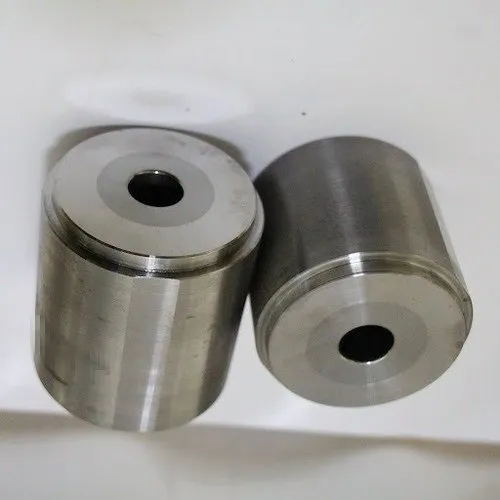
Tungsten carbide, renowned for its exceptional hardness and wear resistance, is the material of choice for demanding industrial applications. However, “tungsten carbide” is not a single material but a family of composites, each with unique properties. Off-the-shelf dies can offer a temporary solution, but they rarely provide the optimized performance, longevity, and efficiency required for specialized manufacturing processes. Customization allows for the precise alignment of the die’s characteristics with the specific material being worked, the operational speeds, and the desired quality of the finished product. This guide will walk you through the essential factors to consider, empowering you to make informed decisions for your next custom tungsten carbide die project.
Table of Contents
- Why is Customization Non-Negotiable for High-Performance Dies?
- The Foundation: What is the Best Tungsten Carbide Grade Selection?
- The Blueprint: Which Design and Geometry Factors are Most Critical?
- The Finish Line: Why is Surface Treatment and Finishing Crucial?
- The Partnership: How to Choose the Right Manufacturing Partner
- Conclusion: Partnering for Precision and Performance
- Frequently Asked Questions (FAQ)
Why is Customization Non-Negotiable for High-Performance Dies?
In the world of precision manufacturing, standard, off-the-shelf components often represent a compromise. For tungsten carbide dies used in high-volume or high-stress applications like wire drawing, cold heading, or extrusion, this compromise can lead to significant inefficiencies. A custom-designed die is engineered to the exact specifications of your process. This means accounting for the specific material you are forming—be it steel, copper, or aluminum—and its unique flow characteristics. A generic die might cause excessive friction, material galling, or inconsistent product dimensions, leading to higher scrap rates and increased downtime.
Furthermore, customization directly translates to enhanced tool life and performance. By selecting the optimal carbide grade, geometry, and surface finish, a custom die can withstand the specific stresses of your operation—whether it’s high impact, abrasive wear, or corrosive environments. This tailored approach significantly extends the die’s operational lifespan, reducing the frequency of tool changes and lowering the total cost of ownership. The initial investment in a custom die is quickly offset by improved productivity, superior product quality, and reduced maintenance and replacement costs, delivering a clear and compelling return on investment.
The Foundation: What is the Best Tungsten Carbide Grade Selection?
The performance of any custom die begins with its material composition. Selecting the correct grade of tungsten carbide is arguably the most critical decision in the customization process. The properties of a carbide grade are determined by the percentage of the cobalt (Co) or nickel (Ni) binder and the size of the tungsten carbide grains. These variables create a spectrum of materials, each balancing hardness, toughness, and wear resistance differently.
Understanding Binders and Grain Size in Tungsten Carbide Grades
The binder, typically cobalt, acts as the “glue” that holds the incredibly hard tungsten carbide grains together. The percentage of this binder is a key determinant of the material’s properties. A lower cobalt percentage (e.g., 3-6%) results in a harder, more wear-resistant material, but it is also more brittle. This is ideal for applications with high abrasive wear but low impact, such as fine wire drawing. Conversely, a higher cobalt percentage (e.g., 15-25%) increases the die’s toughness and impact resistance, making it suitable for high-impact operations like cold heading and stamping, even though it sacrifices some hardness.
Grain size also plays a crucial role. Fine or sub-micron grain sizes increase hardness and allow for a sharper, more durable cutting or forming edge. Coarse grain sizes contribute to higher toughness and are better at resisting cracking under severe impact. The art of custom die manufacturing lies in selecting the precise combination of binder content and grain size that offers the perfect balance for a specific application’s unique set of stresses.
How to Match the Carbide Grade to Your Application
Choosing the right grade requires a deep understanding of your operational demands. You must analyze the primary failure mode of your current dies. Is it gradual wear and loss of profile? Or is it catastrophic failure due to chipping and cracking? Answering this question will guide you toward a grade that emphasizes either wear resistance or toughness. At Xiluomold, our collaborative process begins with this analysis to ensure the material foundation of your die is perfectly suited to its task.
The table below provides a general guide for matching application types with tungsten carbide characteristics:
| Application | Primary Challenge | Recommended Grade Characteristics |
|---|---|---|
| Wire Drawing (Fine Wire) | Abrasive Wear | High Hardness, Low Cobalt (6-8%), Fine Grain |
| Cold Heading & Forging | High Impact & Shock | High Toughness, High Cobalt (15-25%), Coarse Grain |
| Extrusion & Tube Drawing | High Pressure & Heat | Good Hot Hardness, Medium Cobalt (10-15%) |
| Stamping & Punching | Edge Wear & Chipping | Balanced Hardness & Toughness, Medium Cobalt, Fine/Medium Grain |
The Blueprint: Which Design and Geometry Factors are Most Critical?
Once the optimal material is selected, the focus shifts to the die’s physical design and geometry. This is where the die is shaped to perform its specific function with maximum efficiency and precision. Minor adjustments in angles, radii, and clearances can have a profound impact on everything from the quality of the finished part to the operational life of the die itself.
What is the Impact of Die Profile and Internal Geometry?
The internal profile of a forming or drawing die is a masterclass in applied physics. Key elements like the approach angle, bearing length, and back relief must be precisely engineered. The approach angle guides the workpiece into the die and initiates the reduction; too steep an angle increases forming pressure and friction, while too shallow an angle can be inefficient. The bearing length is the parallel section that sizes the final product; its length determines the final dimensional accuracy but also influences frictional forces. An optimized profile ensures smooth material flow, minimizes stress on both the workpiece and the die, and reduces the force required for the operation. This leads to lower energy consumption and less wear on machinery.
Why are Tolerances and Clearances So Important?
In custom die making, precision is measured in microns. Tolerances refer to the permissible limit of variation in a physical dimension. For custom carbide dies, holding extremely tight tolerances (e.g., ±0.001mm) is often necessary to produce parts that meet stringent quality standards. This level of precision ensures part-to-part consistency throughout a long production run. Clearance—the space between a punch and a die, for example—is equally critical. Incorrect clearance can lead to burrs on the finished part, premature dulling of the die edges, or even catastrophic die failure due to excessive force. The ideal clearance depends on the type and thickness of the material being worked, and getting it right is a hallmark of an expert die manufacturer.
How do Thermal Stresses Influence Die Design?
Many forming and extrusion processes generate significant heat due to friction and plastic deformation. This heat causes the die and workpiece to expand. A robust die design must account for this thermal expansion to maintain dimensional accuracy at operating temperatures. Furthermore, rapid heating and cooling cycles can induce thermal shock, leading to micro-cracks that can propagate and cause premature failure. A skilled die designer might incorporate features like cooling channels or select a carbide grade with superior thermal conductivity and a coefficient of thermal expansion that is compatible with the tooling assembly to mitigate these risks. Ignoring thermal factors is a common cause of unexpected die failure in demanding applications.
The Finish Line: Why is Surface Treatment and Finishing Crucial?
The surface of a tungsten carbide die is where the action happens. The quality of this surface directly impacts friction, material flow, product appearance, and tool life. A perfectly smooth, low-friction surface can be just as important as the underlying material grade and geometry. Investing in the right surface finish is not a luxury; it’s a necessity for high-performance applications.
The Critical Role of Surface Roughness (Ra)
Surface roughness, often measured as Ra (Roughness average), quantifies the microscopic peaks and valleys on a material’s surface. In a drawing or extrusion die, a highly polished, mirror-like finish (a very low Ra value) is essential. This ultra-smooth surface reduces the coefficient of friction, which in turn lowers the required forming force, minimizes heat generation, and prevents galling (where workpiece material adheres to the die surface). A lower friction environment not only improves the surface quality of the final product but also dramatically extends the life of the die by reducing abrasive wear.
When Should You Consider Advanced Coatings and Treatments?
For the most demanding applications, an additional surface coating can elevate a die’s performance to the next level. Technologies like Physical Vapor Deposition (PVD) and Chemical Vapor Deposition (CVD) apply a micro-thin layer of an extremely hard and lubricious material, such as Titanium Nitride (TiN) or Diamond-Like Carbon (DLC), onto the die’s working surface. These coatings can offer a surface hardness that is even higher than the carbide substrate itself, providing an exceptional barrier against wear and corrosion. Coatings are particularly beneficial when working with sticky or abrasive materials, or in high-speed operations where friction and heat are extreme. The decision to use a coating should be based on a cost-benefit analysis of the expected increase in tool life and performance.
The Partnership: How to Choose the Right Manufacturing Partner
The success of your custom tungsten carbide die project is intrinsically linked to the expertise and capabilities of your manufacturing partner. The most detailed specifications are meaningless if the manufacturer cannot execute them with the required precision. Choosing the right partner is about more than just finding a supplier; it’s about finding a collaborator who can add value at every stage of the process.
What to Look for in a Manufacturer’s Technical Capabilities
A top-tier die manufacturer should possess a range of advanced manufacturing technologies. Look for a company that has invested in state-of-the-art equipment such as CNC grinders, Wire EDM (Electrical Discharge Machining), and Sinker EDM. These technologies are essential for achieving the complex geometries and tight tolerances required for modern dies. Furthermore, inquire about their quality control processes. Do they use advanced metrology equipment like CMMs (Coordinate Measuring Machines) and optical comparators to verify every dimension? A commitment to quality control is a direct reflection of their commitment to delivering a flawless product. At Xiluomold, our facility is equipped with these technologies, operated by skilled technicians who ensure every die we produce meets or exceeds client specifications.
The Value of Engineering Consultation and Prototyping
The best manufacturing partners act as expert consultants. They should be willing to engage in a detailed discussion about your application, challenge your assumptions, and offer suggestions based on their experience. A collaborative design review process can often identify potential issues or opportunities for improvement before any material is cut. Additionally, the ability to produce prototypes or run simulations can be invaluable. Testing a prototype allows you to validate the design in a real-world environment, ensuring that the final production dies will perform as expected. This iterative process de-risks the project and ensures the final solution is truly optimized for your needs.
Conclusion: Partnering for Precision and Performance
Customizing a tungsten carbide die is a multifaceted process that demands a holistic approach. Success is not achieved by focusing on a single factor, but by understanding the intricate interplay between material selection, geometric design, surface finish, and manufacturing execution. By carefully considering each of these critical areas, you can develop a die that not only meets the specifications of your product but also enhances the efficiency, reliability, and profitability of your entire operation. This journey from concept to a high-performance die requires a partner who possesses both the technical capability and the collaborative spirit to bring your vision to life.
Ready to design a custom tungsten carbide die that elevates your manufacturing process? The expert team at Xiluomold is here to help. Contact us today to start a conversation about your specific needs and discover how our precision engineering can make a difference in your production line.
Frequently Asked Questions (FAQ)
What is the typical lifespan of a custom tungsten carbide die?
The lifespan varies dramatically based on the application, the material being worked, operational speeds, and proper maintenance. However, a well-designed custom die, made from the correct grade and properly maintained, can last hundreds of thousands or even millions of cycles, significantly outperforming standard dies.
How does cobalt content affect the price of a carbide die?
Cobalt is a significant cost driver in the raw material for tungsten carbide. Generally, grades with a higher percentage of cobalt will have a higher material cost. However, this cost should be weighed against the increased toughness and potential for longer tool life in high-impact applications.
What is the lead time for a custom tungsten carbide die?
Lead time depends on the complexity of the design, material availability, and the manufacturer’s current workload. It can range from a few weeks for simple designs to several months for highly complex, multi-part die assemblies. Always discuss lead times with your manufacturing partner early in the process.
Can a worn tungsten carbide die be repaired or reworked?
Yes, in many cases. If the wear is not too severe, dies can often be re-polished or re-ground to restore their original profile and surface finish. This can be a cost-effective way to extend the total life of the tool. Discussing the potential for reworking should be part of the initial design conversation.