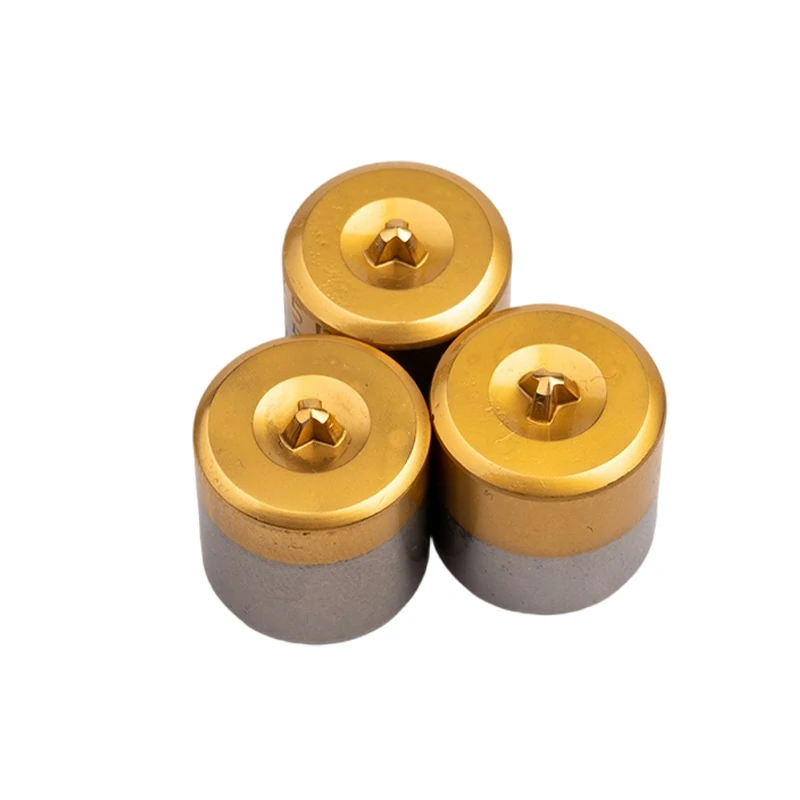
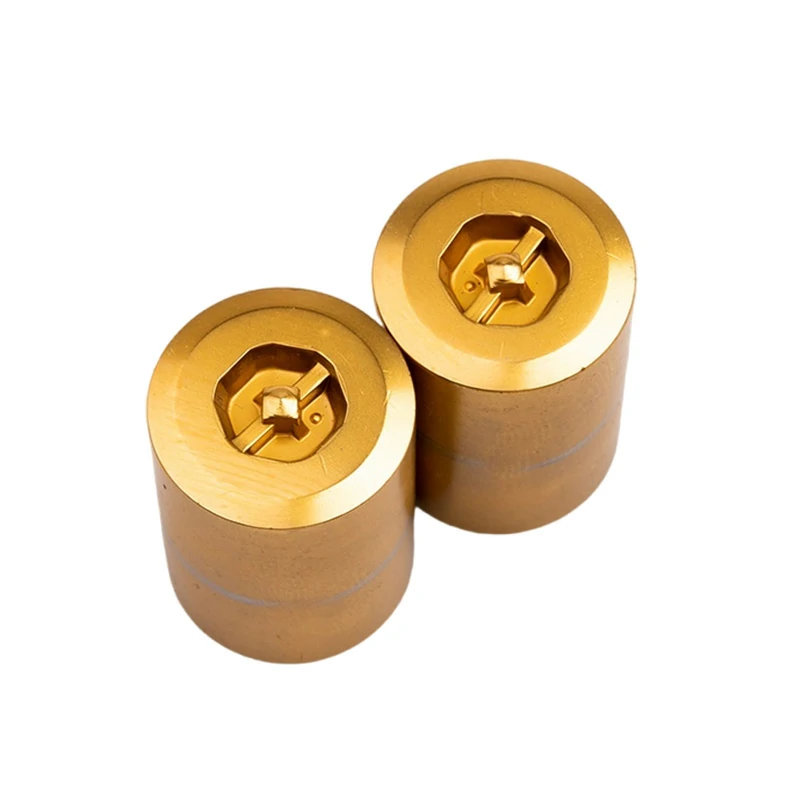
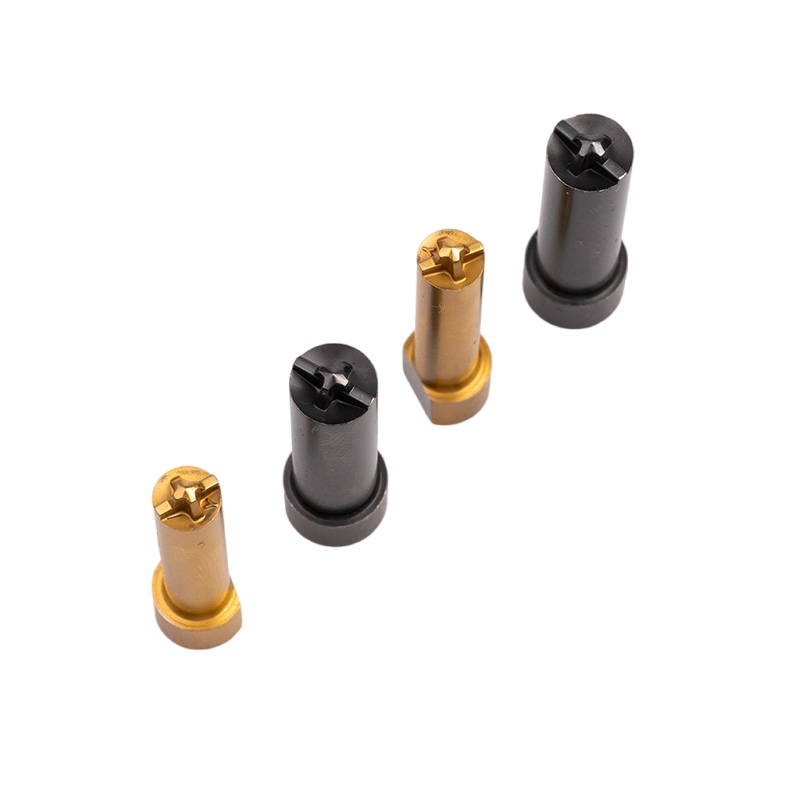
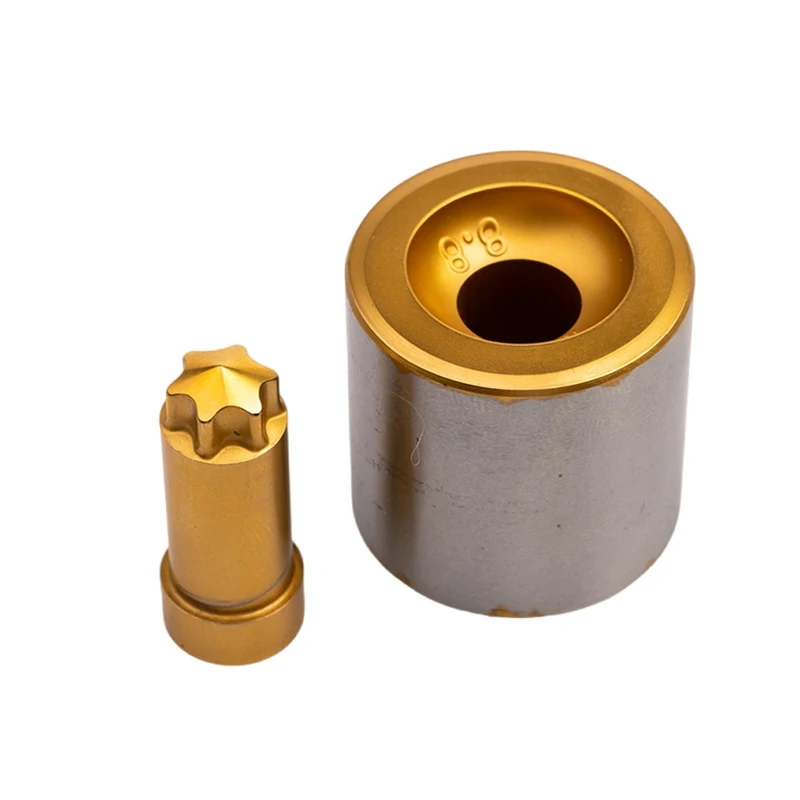
Selecting the optimal material for a cold heading die is a critical decision that directly impacts manufacturing efficiency, tool life, and the final cost-per-piece. The choice primarily revolves around two material families: various grades of tool steel and tungsten carbide. While tool steels offer versatility and cost-effectiveness for short to medium runs, tungsten carbide provides exceptional wear resistance and longevity for high-volume, demanding applications. The best material depends on a careful analysis of production volume, fastener complexity, workpiece material, and budget.
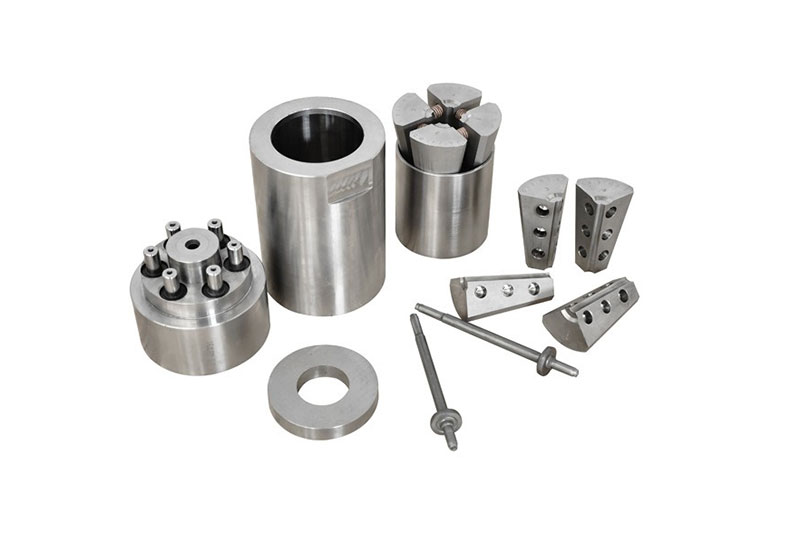
At Xiluomold, we specialize in manufacturing high-precision dies and molds, and we understand that the foundation of a successful cold heading operation lies in the tooling. A die that fails prematurely leads to costly downtime, production delays, and quality control issues. This comprehensive guide will delve into the properties, advantages, and ideal applications of both steel and tungsten carbide, empowering you to make an informed decision for your manufacturing needs.
The Foundation: What is a Cold Heading Die and Why Does Material Choice Matter?
Cold heading, also known as cold forming, is a high-speed manufacturing process that shapes wire at room temperature into a finished or near-finished part, such as a screw, bolt, or rivet. The process involves a series of dies and punches that apply immense force to progressively form the metal. The cold heading die is the heart of this operation; it’s the stationary tool that contains the cavity into which the wire is forced, shaping its final geometry.
Why is the material so crucial? The die must withstand extreme conditions:
- Immense Compressive Forces: The pressure exerted during forming can exceed hundreds of tons.
- Abrasive Wear: The constant flow of metal against the die surface causes significant friction and wear.
- Impact Stress: The repetitive, high-speed nature of the process creates cyclical impact loading.
- Heat Generation: Although a “cold” process, friction generates localized heat that can affect the die’s properties.
Choosing the wrong material leads to premature die failure through cracking, chipping, or rapid wear. This translates directly into increased tool costs, machine downtime for die changes, and inconsistent part quality. The right material choice, however, maximizes tool life, ensures dimensional accuracy, and ultimately lowers the total cost of production.
The Contenders: An Overview of Primary Die Materials
The landscape of cold heading die materials is dominated by two primary categories, each with its own family of grades and specific properties tailored for different challenges.
Tool Steels: The Versatile Workhorse
Tool steels are a class of carbon and alloy steels specifically designed for their excellent hardness, wear resistance, and toughness. They are the traditional and most widely used materials for cold heading dies, especially for small to medium production runs or for creating highly complex shapes where the brittleness of carbide might be a concern.
- High-Speed Steels (HSS), such as M2: Known for a great balance of toughness and hardness. M2 steel can withstand the repetitive impact of cold heading without fracturing easily, making it a reliable choice for a wide range of standard applications.
- Cold Work Tool Steels, such as D2: D2 steel is characterized by its exceptionally high wear resistance due to a high chromium and carbon content. While less tough than M2, it excels in applications where abrasive wear is the primary failure mode.
- Powder Metallurgy (PM) Steels: These represent a premium tier of tool steels. The powder metallurgy process creates a very fine and uniform microstructure, resulting in a material with superior toughness, wear resistance, and compressive strength compared to conventional tool steels. They effectively bridge the performance gap between traditional steels and tungsten carbide.
Tungsten Carbide: The Endurance Champion
Tungsten carbide is not a metal, but a cermet (ceramic and metal composite). It consists of extremely hard tungsten carbide (WC) particles held together in a softer metal binder, typically cobalt (Co). By varying the percentage of the cobalt binder and the size of the WC grains, a wide range of grades can be produced with different properties.
Tungsten carbide’s defining characteristic is its extraordinary hardness and compressive strength, which are significantly higher than any tool steel. This translates into unparalleled wear resistance, allowing carbide dies to produce millions, sometimes tens of millions, of parts before needing replacement.
- High Cobalt Grades (12-25% Co): A higher percentage of cobalt binder increases the material’s toughness and impact resistance, making it suitable for heading operations with severe impacts. However, this comes at the cost of some wear resistance.
- Low Cobalt Grades (3-10% Co): With less binder, these grades are exceptionally hard and wear-resistant. They are ideal for extrusion dies, piercing punches, and forming operations where abrasion is the main concern and impacts are less severe.
Head-to-Head Comparison: Steel vs. Tungsten Carbide
Understanding the direct trade-offs between these two material classes is key to making the right choice. Here is a clear comparison of their most important attributes for cold heading applications.
| Property | Tool Steel (e.g., M2, D2) | Tungsten Carbide | Key Takeaway for Cold Heading |
|---|---|---|---|
| Hardness & Wear Resistance | Good to Excellent (Typically 58-64 HRC) | Exceptional (Typically 88-94 HRA) | Carbide offers significantly longer die life in high-volume runs due to superior wear resistance. |
| Toughness & Impact Resistance | Excellent | Fair to Good | Steel is more forgiving and less prone to chipping or cracking under severe impact or with misaligned setups. |
| Compressive Strength | High | Extremely High | Carbide can withstand higher forming pressures without deforming, ensuring better dimensional stability. |
| Upfront Material Cost | Lower | Significantly Higher | Steel offers a lower initial investment, making it attractive for prototyping and short runs. |
| Machinability & Fabrication | Relatively easy to machine (before heat treat) | Very difficult; requires diamond grinding and EDM | Complex die geometries are often easier and more cost-effective to produce in steel. |
| Typical Die Life | Thousands to hundreds of thousands of parts | Hundreds of thousands to tens of millions of parts | The lifetime value of carbide is unmatched for mass production. |
How to Select the Perfect Die Material for Your Application?
The best choice is not universal; it’s situational. At Xiluomold, our engineering process always begins by asking our clients four critical questions to determine the optimal material strategy.
What is Your Production Volume?
This is often the primary deciding factor.
- Low Volume / Prototyping: For runs under 100,000 pieces, the extended life of carbide may not justify its high upfront cost. A high-quality tool steel like M2 or D2 is almost always the most economical choice.
- High Volume / Mass Production: For runs in the millions, tungsten carbide is the clear winner. The reduction in downtime for die changes and the massively extended tool life result in a much lower cost-per-piece, easily offsetting the initial investment.
How Complex is the Fastener Geometry?
The shape of the part plays a significant role in material selection.
- Simple Shapes (e.g., standard round heads, simple extrusions): These geometries are well-suited for the properties of tungsten carbide. The stable, predictable forming process minimizes the risk of chipping.
- Complex Shapes (e.g., intricate trim dies, parts with sharp internal corners): Intricate designs create stress concentrations that can easily fracture brittle materials. The superior toughness of PM steels or high-toughness tool steels makes them a safer and more reliable option for these challenging geometries.
What Material Are You Forming?
The material being formed dictates the level of abrasion and pressure on the die.
- Softer Materials (e.g., aluminum, low-carbon steel): These are less abrasive on the die. A standard tool steel can provide excellent life and performance.
- Harder Materials (e.g., stainless steel, high-carbon alloys): These materials are highly abrasive and require much higher forming pressures. The superior wear resistance and compressive strength of tungsten carbide are essential to achieve acceptable die life.
What is Your Budget and Cost-Per-Piece Target?
It’s crucial to look beyond the initial purchase price of the die.
- Focus on Upfront Cost: If initial capital outlay is the primary constraint, tool steel is the obvious choice.
- Focus on Total Cost of Ownership (TCO): If the goal is the lowest possible cost-per-piece over the life of the project, you must factor in downtime, labor for die changes, and the cost of replacement tooling. In high-volume scenarios, tungsten carbide consistently delivers a lower TCO despite its higher initial price.
Beyond the Base Material: The Role of Surface Treatments and Coatings
To further enhance performance, both steel and carbide dies can benefit from advanced surface treatments. These coatings add a micro-thin, ultra-hard layer that can dramatically improve lubricity and wear resistance.
- PVD Coatings (Physical Vapor Deposition): Coatings like Titanium Nitride (TiN) or Titanium Aluminum Nitride (TiAlN) are applied at relatively low temperatures. They create a very hard, low-friction surface that prevents galling (material transfer from the workpiece to the die) and reduces abrasive wear. They are excellent for both steel and carbide dies.
- CVD Coatings (Chemical Vapor Deposition): These coatings are applied at higher temperatures and are typically thicker and more wear-resistant than PVD. They are exceptionally effective but are primarily used on tungsten carbide dies that can withstand the high application temperatures.
- Nitriding: This is a case-hardening process used only for steels. It diffuses nitrogen into the surface of the die, creating a hard outer layer without making the core of the tool brittle. It’s a cost-effective way to boost the wear resistance of tool steel dies.
Partnering with an Expert: Why Your Die Manufacturer Matters
The theoretical knowledge of materials is only one part of the equation. True optimization comes from experience. A knowledgeable die manufacturer like Xiluomold does more than just machine a part to a print. We act as a consultant, helping you navigate these complex material trade-offs.
Our expertise ensures that the selected material, heat treatment, and any applied coatings are perfectly matched to your specific application. We analyze your part geometry, production volumes, and workpiece material to recommend a tooling solution that delivers the best performance and the highest return on investment. Choosing the right partner is just as important as choosing the right material.
Conclusion: Making an Informed Decision for Optimal Performance
The debate between steel and tungsten carbide for cold heading dies is not about which material is “better,” but which material is right for the job. Tool steels are the tough, versatile, and cost-effective solution for short-to-medium runs and complex geometries. Tungsten carbide is the undisputed champion of endurance, offering unparalleled wear resistance and long-term value for high-volume production of simpler forms, especially with abrasive materials.
By carefully evaluating your production volume, part complexity, workpiece material, and budget, you can move beyond a simple cost comparison to a strategic decision that enhances productivity and profitability. The right die material is a critical investment in the efficiency and quality of your entire manufacturing operation.
Frequently Asked Questions (FAQ)
- 1. How much longer does a tungsten carbide die last compared to a steel die?
- The life extension can be dramatic. Depending on the application, a tungsten carbide die can last anywhere from 5 to 50 times longer than a conventional tool steel die. For high-volume screw manufacturing, it’s not uncommon to see carbide dies produce over 10 million pieces.
- 2. Can you use D2 tool steel for cold heading dies?
- Yes, D2 is commonly used, particularly for applications where abrasive wear is the main concern and impact is moderate. It’s often used for trim dies and certain forming stations. However, for heading punches that see high impact, a tougher steel like M2 or a PM steel is often a better choice.
- 3. What is the most common cause of cold heading die failure?
- The most common failure modes are natural wear (losing dimensional tolerance), cracking due to fatigue or excessive impact, and chipping, especially in brittle materials like carbide when subjected to sharp stress concentrations or misalignment.
- 4. Is the higher cost of a PVD coating worth it?
- In most cases, yes. A quality PVD coating can often double the life of a die (both steel and carbide) for a fractional increase in the total tool cost. It reduces friction, prevents material buildup, and improves part release, making it a very high-ROI addition.