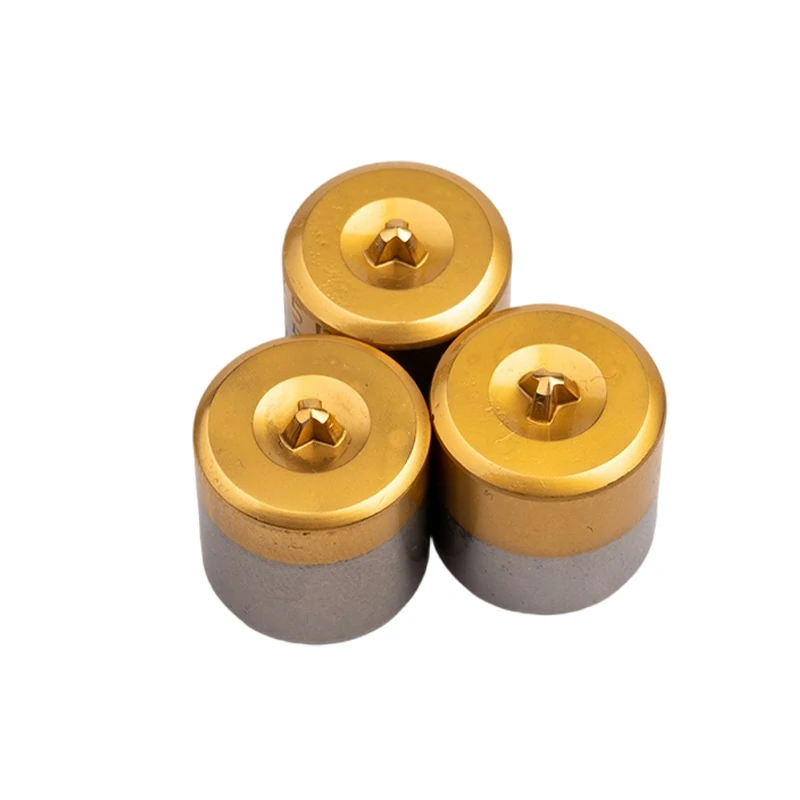
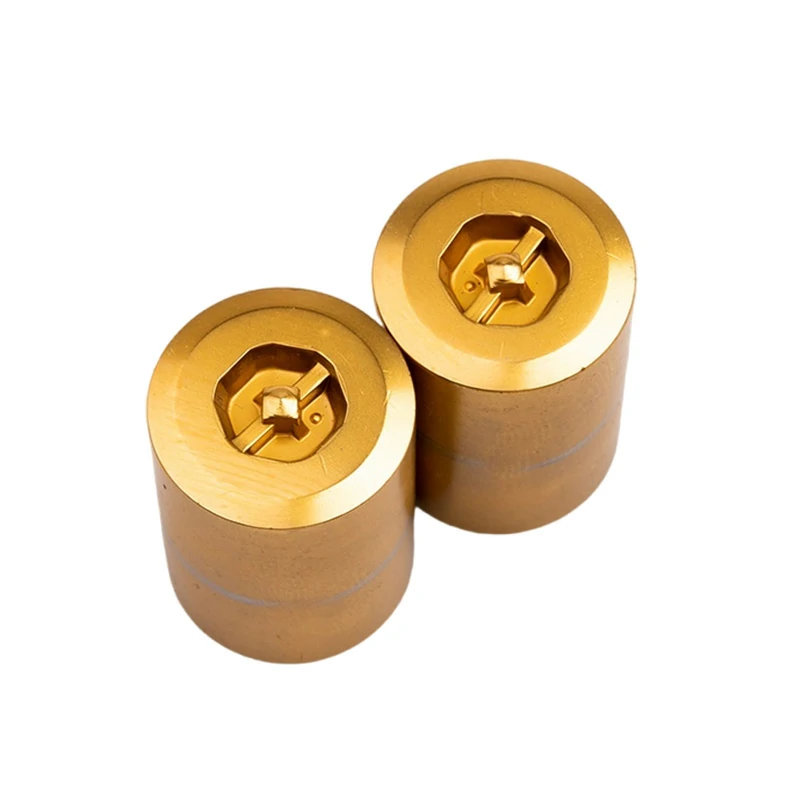
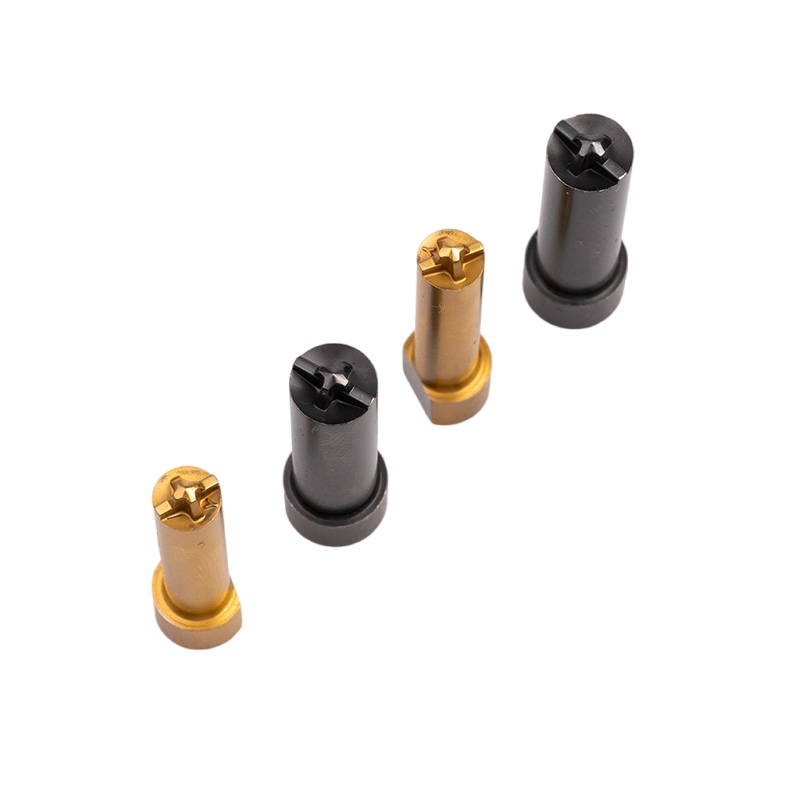
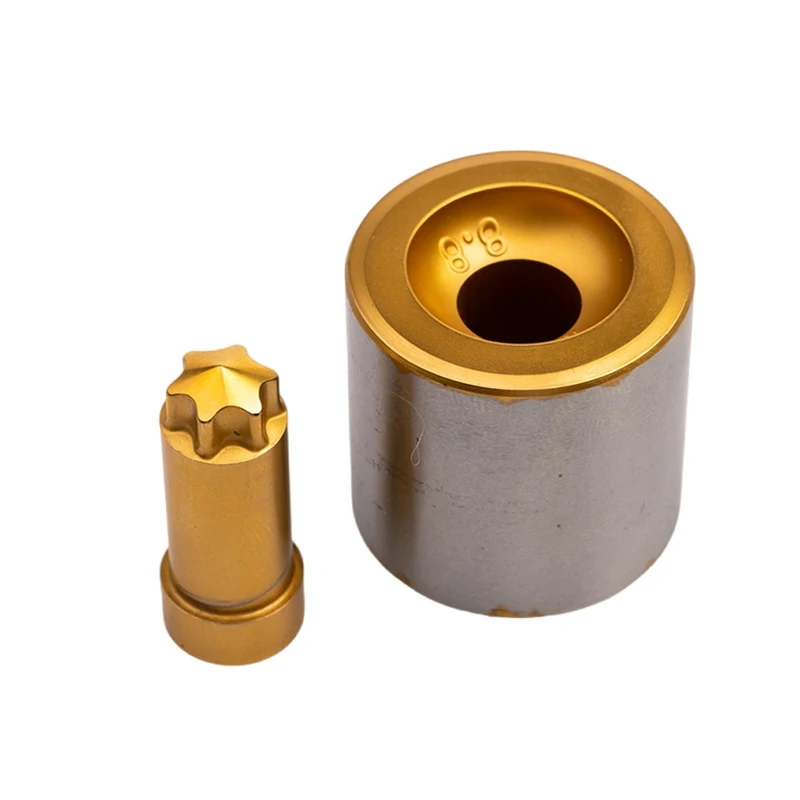
Selecting the right material for your die inserts, whether tungsten carbide or tool steel, is a critical decision that directly impacts production efficiency, part quality, tooling lifespan, and overall manufacturing cost. The best choice depends on a careful evaluation of your specific application, including the material being formed, production volume, required tolerances, and operational budget. While steel dies offer a cost-effective solution for many applications, carbide dies provide superior wear resistance and durability for high-volume, high-precision operations. This comprehensive guide will walk you through the key differences, benefits, and selection criteria to help you determine the ideal die material for your manufacturing process.
Table of Contents
- What Are Die Inserts and Why is Material Selection Crucial?
- An Introduction to Tool Steel for Dies
- An Introduction to Tungsten Carbide for Dies
- Carbide vs. Steel Dies: A Head-to-Head Comparison
- How to Select the Right Die Material: 4 Key Factors
- Partner with Xiluo Mold for Your Die Needs
- Frequently Asked Questions (FAQ)
What Are Die Inserts and Why is Material Selection So Crucial?
In manufacturing processes like cold heading, forging, stamping, and extrusion, a die is a specialized tool used to shape or cut material. Die inserts, also known as die nibs, are the critical components of the die assembly that come into direct contact with the workpiece. Because they bear the brunt of the immense pressure, friction, and impact during operation, their material composition is paramount. Choosing the wrong material can lead to premature tool failure, frequent downtime for replacements, inconsistent part quality, and escalating production costs. A strategic material choice, on the other hand, optimizes the entire manufacturing system. It ensures the die can withstand the rigors of the process, maintain dimensional accuracy over long runs, and deliver a superior return on investment.
An Introduction to Tool Steel for Dies
Tool steels are a family of high-carbon steel alloys renowned for their hardness, toughness, and resistance to abrasion and deformation at elevated temperatures. They are a traditional and highly versatile choice for die manufacturing. Common grades used for die inserts include D2, A2, and various high-speed steels (HSS) like M2. These materials can be heat-treated to achieve a wide range of hardness and toughness profiles, making them adaptable to different applications. Steel’s excellent machinability allows for the creation of complex die geometries with relative ease and lower initial cost compared to harder materials.
Key Properties of Tool Steel
The defining characteristics of tool steel make it a reliable choice for many industrial applications. Its primary advantage is its exceptional toughness, which is its ability to absorb impact and energy without fracturing. This makes steel dies highly resistant to chipping or cracking under sudden loads, a common occurrence in stamping and forging operations. Furthermore, steel is significantly easier and less costly to machine, grind, and finish than carbide. This translates to lower initial tooling costs and faster lead times for producing new or custom dies. While not as hard as carbide, tool steels offer good wear resistance and can be coated with PVD or CVD coatings to further enhance surface hardness and lubricity.
When Should You Choose Steel Die Inserts?
Steel die inserts are the ideal choice in several specific scenarios. They are perfectly suited for short to medium production runs where the tooling does not need to endure millions of cycles. If your process involves forming softer materials, such as aluminum, low-carbon steel, or copper, a tool steel die will often provide sufficient durability. Another key consideration is the complexity of the die shape. For parts with intricate geometries that would be prohibitively expensive or difficult to grind from carbide, steel offers a more practical and economical solution. Finally, when the initial budget is a primary constraint or when prototyping new parts, steel dies provide a high-performance, cost-effective entry point without the significant upfront investment of carbide.
An Introduction to Tungsten Carbide for Dies
Tungsten carbide is a composite material, technically a cermet, made by sintering powdered tungsten carbide (WC) with a metallic binder, typically cobalt (Co). The result is a material that is exceptionally hard, strong, and dense. Its hardness is second only to diamond, giving it extraordinary resistance to abrasive wear, deformation, and heat. Carbide dies have become the industry standard for high-performance, high-volume manufacturing where precision and tool life are the most important factors. Different grades of carbide, with varying grain sizes and cobalt percentages, are available to fine-tune properties like toughness and wear resistance for specific tasks.
Key Properties of Tungsten Carbide
The standout property of tungsten carbide is its phenomenal hardness and wear resistance. Carbide dies can withstand millions of production cycles with minimal wear, maintaining consistent part dimensions and surface finish long after a steel die would have failed. This durability translates directly into less machine downtime and higher productivity. Carbide also exhibits a very high compressive strength, meaning it can endure extreme forming pressures without deforming or breaking. Its low coefficient of thermal expansion ensures dimensional stability even as temperatures fluctuate during operation. While its initial cost is higher, the extended lifespan and superior performance of carbide often result in a lower total cost of ownership in demanding applications.
When Should You Choose Carbide Die Inserts?
You should opt for carbide die inserts when performance and longevity are non-negotiable. They are the definitive choice for high-volume, continuous production runs where minimizing downtime for tool changes is critical. If your application involves forming hard or abrasive materials like stainless steel, high-carbon alloys, or exotic metals, the superior wear resistance of carbide is essential to prevent premature tool failure. Furthermore, for any process that demands extremely tight tolerances and a flawless surface finish on the final part, carbide’s ability to hold its shape and edge is unmatched. While the initial investment is greater, the long-term savings in tooling replacement, reduced scrap rates, and increased uptime make carbide the most economically sound choice for demanding, high-output manufacturing.
Carbide vs. Steel Dies: A Head-to-Head Comparison
To make an informed decision, it’s helpful to see a direct comparison of the key attributes of tungsten carbide and tool steel. Each material has a distinct profile of strengths and weaknesses that makes it suitable for different manufacturing contexts.
| Attribute | Tungsten Carbide | Tool Steel |
|---|---|---|
| Hardness & Wear Resistance | Exceptional (Typically 88-94 HRA). Extremely resistant to abrasion and wear. | Good to Excellent (Typically 58-65 HRC). Can be coated for enhanced hardness. |
| Toughness (Impact Resistance) | Lower. More brittle and susceptible to chipping under severe, sharp impact. | Excellent. Can withstand high-impact shocks and stresses without fracturing. |
| Tool Lifespan | Very Long. Can last 10 to 20 times longer (or more) than steel in ideal conditions. | Moderate. Will require more frequent replacement in high-volume applications. |
| Initial Cost | High. Raw material and machining costs are significantly higher. | Low. More affordable raw material and easier to machine. |
| Machinability | Difficult. Requires specialized diamond grinding and EDM processes. | Excellent. Can be easily milled, turned, and ground into complex shapes. |
| Best Use Case | High-volume, high-precision forming of hard or abrasive materials. | Prototyping, short/medium runs, forming softer materials, complex geometries. |
How to Select the Right Die Material: 4 Key Factors
What is the best way to choose between carbide and steel? The answer lies in a systematic analysis of your process. By evaluating the following four factors, you can confidently select the material that will provide the best balance of performance, longevity, and cost for your specific needs.
1. Application and Workpiece Material
The first question to ask is: what are you making, and what are you making it from? The nature of the operation (e.g., cold heading, stamping, drawing) and the properties of the workpiece material are the most significant drivers of die wear. Forming soft, non-abrasive materials like aluminum or low-carbon steel puts far less stress on a die than forming tough, abrasive materials like stainless steel, titanium, or high-carbon alloys. For abrasive materials, carbide is almost always the necessary choice to achieve a reasonable tool life. For softer materials, tool steel is often more than adequate and presents a more economical option.
2. Production Volume and Run Length
How many parts do you need to produce? The answer will heavily influence your material choice. For prototyping, R&D, or short production runs (a few thousand pieces), the high initial cost of a carbide die may be difficult to justify. A steel die can be produced quickly and affordably to meet these needs. Conversely, for high-volume, continuous manufacturing where the machinery runs 24/7 to produce millions of parts, the equation flips. A carbide die’s longevity means fewer tool changes, less downtime, and more consistent production. The higher upfront cost is quickly offset by the massive gains in productivity and the reduction in replacement tooling costs.
3. Required Precision and Tolerances
What level of accuracy does your final part require? If your components must adhere to very tight dimensional tolerances and require a superior surface finish, carbide is the superior choice. Because it resists wear so effectively, a carbide die will maintain its precise geometry and smooth surface for a much longer period. This ensures part-to-part consistency throughout a long production run. Steel dies, while capable of producing precise parts initially, will begin to wear sooner. This gradual wear can lead to dimensions drifting out of tolerance, resulting in higher scrap rates and a less consistent product over the life of the tool.
4. Budget and Total Cost of Ownership (TCO)
While the initial purchase price is an important factor, it’s crucial to look beyond it and consider the Total Cost of Ownership (TCO). TCO includes not only the initial die cost but also the costs associated with machine downtime, labor for tool changes, scrap rates, and the frequency of purchasing replacement dies.
- Steel Dies: Lower initial cost, but potentially higher TCO in high-volume settings due to more frequent replacement and associated downtime.
- Carbide Dies: Higher initial cost, but often a much lower TCO for demanding applications due to extreme longevity, reduced downtime, and lower scrap rates.
A thorough TCO analysis will often reveal that investing in a more durable carbide die is the more financially sound decision in the long run for high-output processes.
Partner with Xiluo Mold for Your Die Needs
Choosing between carbide and steel is a nuanced decision with significant consequences for your bottom line. At Xiluo Mold, we don’t just manufacture dies; we partner with our clients to find the optimal solution for their unique challenges. With extensive experience in both high-quality tool steels and a wide range of tungsten carbide grades, our engineering team can help you perform the critical analysis needed to make the right choice.
We leverage state-of-the-art machining, grinding, and EDM technology to produce die inserts with exceptional precision and durability, regardless of the material. Whether you need a cost-effective steel die for a prototype run or a high-performance carbide die designed for millions of cycles, Xiluo Mold has the expertise and capability to deliver. Contact us today to discuss your project, and let us help you enhance your manufacturing efficiency and product quality.
Frequently Asked Questions (FAQ)
1. How much longer does a carbide die last compared to a steel die?
This varies greatly depending on the application, but in ideal conditions (e.g., forming abrasive material in a high-volume process), a carbide die can last anywhere from 10 to 20 times longer than a standard D2 tool steel die, and sometimes even more.
2. Can tool steel dies be repaired or re-sharpened?
Yes, one of the advantages of tool steel is that it can often be re-ground or re-sharpened to extend its life, as long as the wear is not too severe. This can be a cost-effective way to maximize the value of the tool.
3. Is tungsten carbide always the “better” material?
Not necessarily. “Better” is relative to the application. For a low-volume job requiring a die with high impact toughness, tool steel is the “better” and more economical choice. Carbide is “better” for applications where hardness, wear resistance, and longevity are the top priorities.
4. What is the effect of coatings on steel dies?
Applying PVD (Physical Vapor Deposition) coatings like TiN (Titanium Nitride) or AlCrN (Aluminum Chromium Nitride) to steel dies can significantly increase their surface hardness and lubricity. This can improve wear resistance and extend the life of the tool, bridging some of the performance gap between uncoated steel and solid carbide.