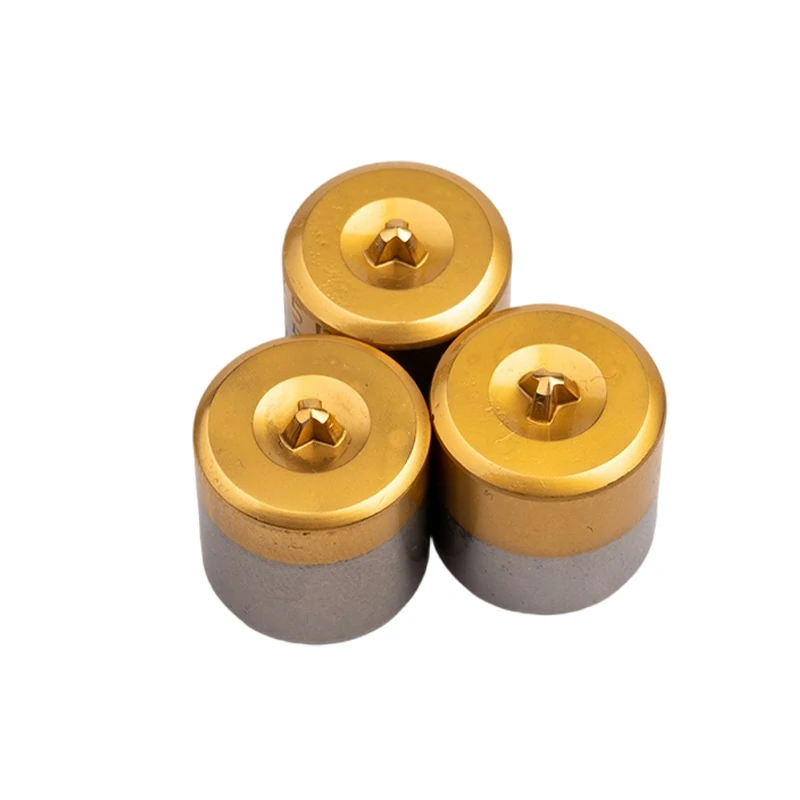
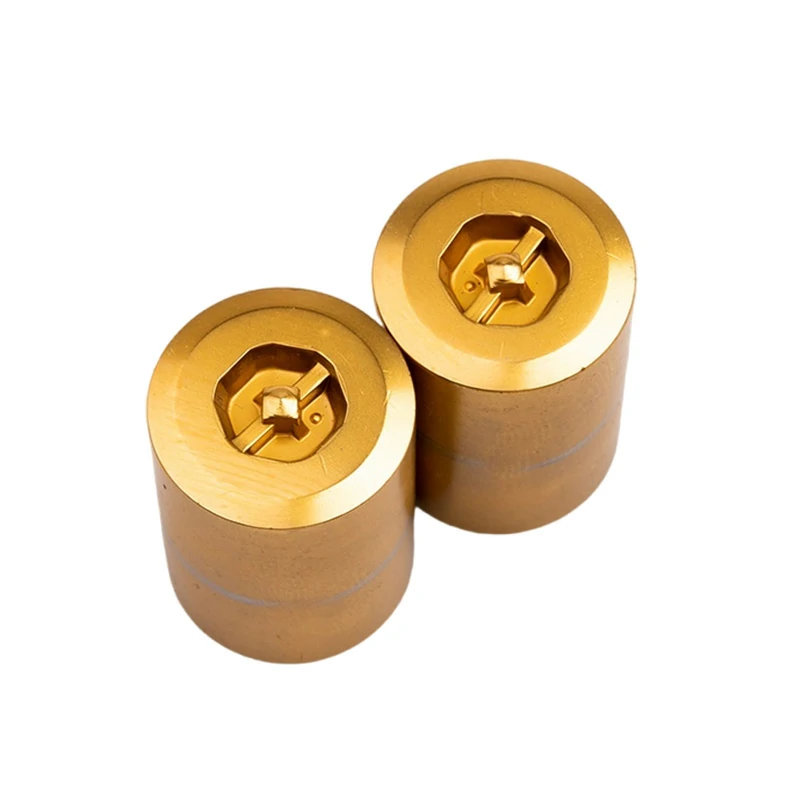
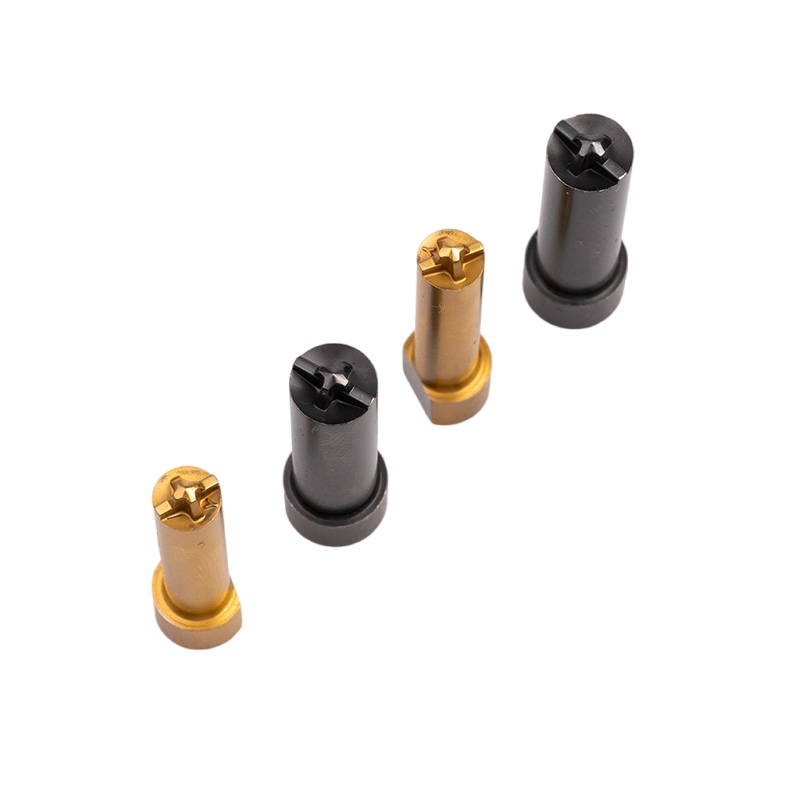
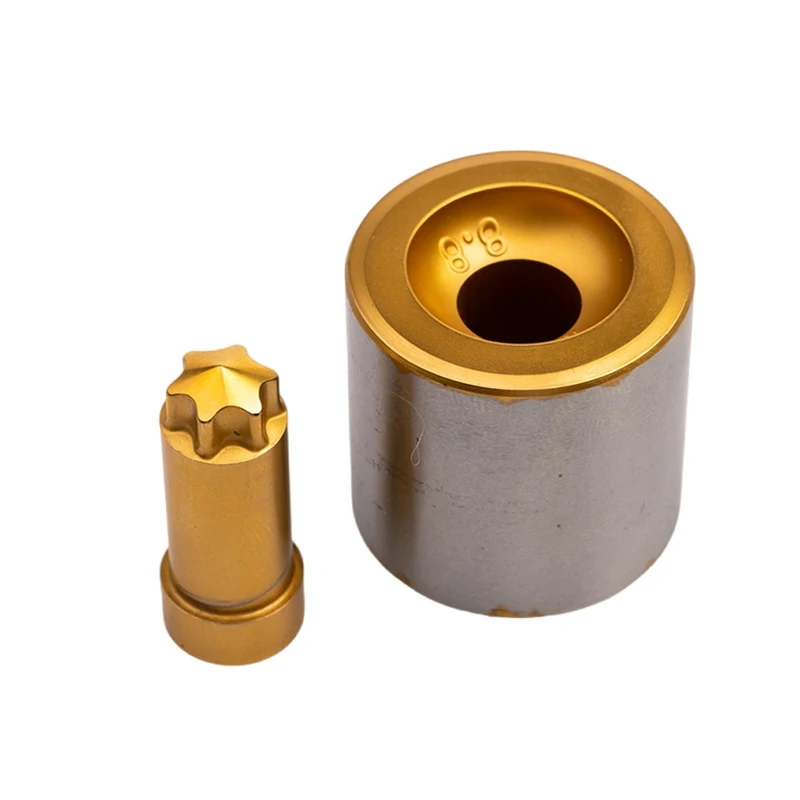
Tungsten carbide cold heading dies are essential for the modern fastener industry because their exceptional hardness, wear resistance, and compressive strength enable the high-speed, high-volume production of precise and consistent fasteners. This results in significantly longer tool life, reduced manufacturing downtime, and a lower overall cost-per-piece compared to traditional steel dies. In an industry where millions of identical components like screws, bolts, and rivets are produced daily, the efficiency, reliability, and precision of the tooling are not just beneficial—they are fundamental to profitability and market competitiveness. This article explores the critical role of tungsten carbide dies and explains why they have become the undisputed material of choice for serious fastener manufacturers.
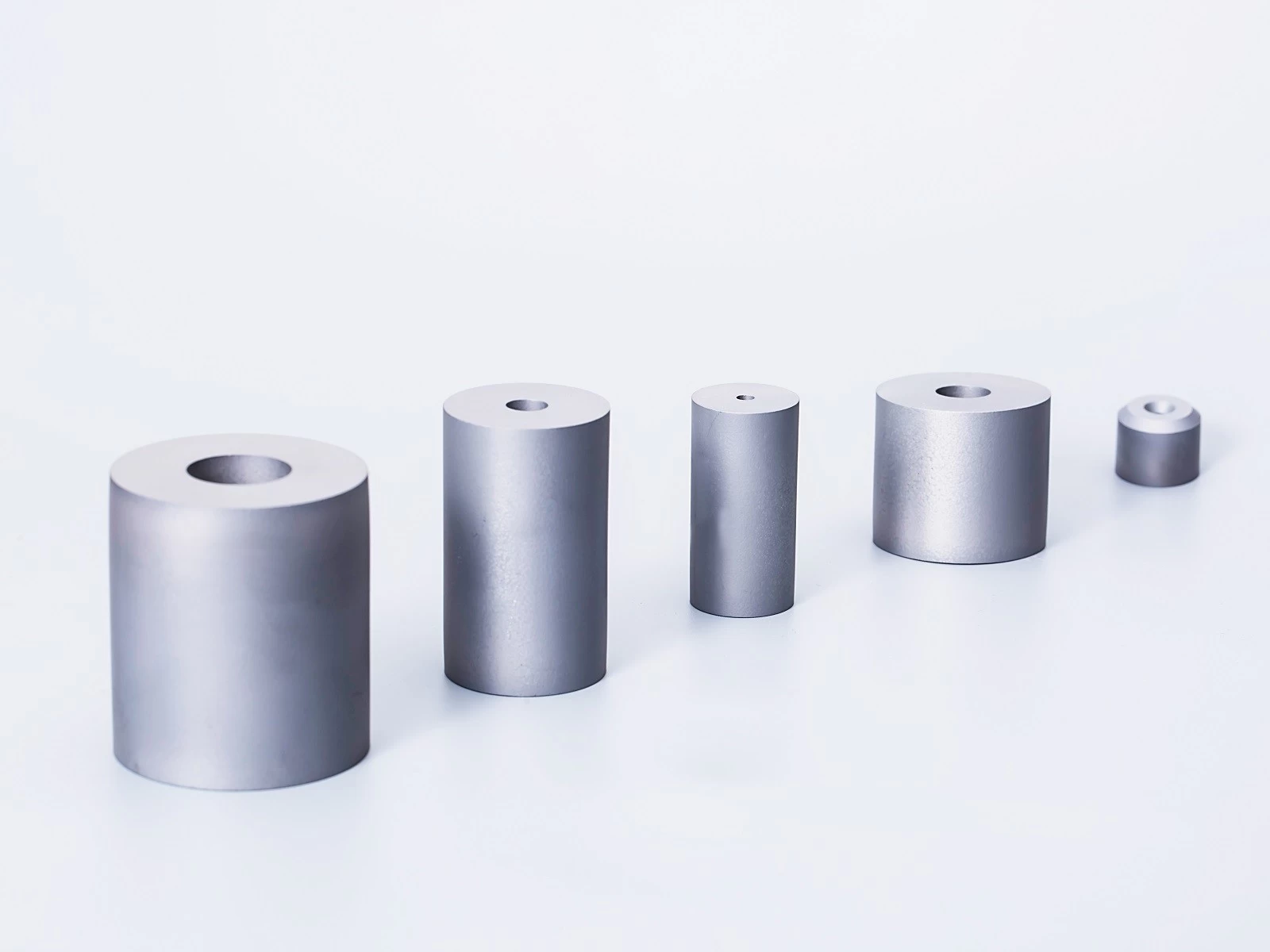
Table of Contents
- What is Cold Heading and Why Are Dies So Important?
- Why is Tungsten Carbide the Superior Material for Cold Heading Dies?
- The Tangible Business Benefits of Using Carbide Dies
- Tungsten Carbide vs. High-Speed Steel: A Direct Comparison
- How to Choose the Right Tungsten Carbide Die Manufacturer?
- Conclusion: The Indispensable Foundation of Modern Fastener Production
- Frequently Asked Questions (FAQ)
What is Cold Heading and Why Are Dies So Important?
Before diving into the material science, it’s crucial to understand the process. Cold heading, also known as cold forming or upset forging, is a high-speed manufacturing process where wire at room temperature is sheared to a specific length and then shaped by a series of powerful strikes from punches into a die. This process forms the head and other features of a fastener. The die is the heart of this operation; it is the precision-engineered mold that contains the wire blank and shapes it under immense force. It dictates the final dimensions, shape, and quality of every single fastener.
The forces involved in cold heading are astronomical. The die must withstand repeated, high-impact stress cycles without deforming, cracking, or wearing out. If a die fails or wears prematurely, the entire production line grinds to a halt, leading to costly downtime. Furthermore, as the die wears, the dimensions of the fasteners it produces begin to drift out of tolerance, resulting in scrap and quality control issues. Therefore, the material from which the die is made is the single most critical factor determining the efficiency, quality, and profitability of a fastener manufacturing operation.
Why is Tungsten Carbide the Superior Material for Cold Heading Dies?
For decades, tool steels were the standard for dies. However, with the demand for higher production speeds and tighter tolerances, their limitations became apparent. Tungsten carbide (often referred to as simply “carbide”) emerged as a revolutionary material that addresses these shortcomings. It’s a composite material made from hard tungsten carbide particles bonded together by a metallic binder, typically cobalt. This unique composition gives it a combination of properties that make it perfectly suited for the rigors of cold heading.
Unmatched Hardness and Extreme Wear Resistance
Tungsten carbide is one of the hardest materials known to man, second only to diamond. On the Rockwell Hardness scale, it typically measures between 88 and 94 HRA, far exceeding even the hardest tool steels. This extreme hardness provides outstanding wear resistance. In the cold heading process, the continuous flow of metal wire under high pressure creates an intensely abrasive environment. A steel die will quickly erode under this assault, but a tungsten carbide die maintains its precise geometry for millions of cycles. This means the first fastener produced is dimensionally identical to the millionth, ensuring unparalleled consistency.
Exceptional Compressive Strength Under Pressure
Beyond hardness, tungsten carbide exhibits incredible compressive strength. This is the ability to withstand immense squeezing forces without cracking or deforming. During each strike in the cold heading machine, the die is subjected to forces that can exceed 300,000 psi. Tungsten carbide’s robust microstructure allows it to absorb and resist these repeated impacts flawlessly. This strength prevents die chipping and catastrophic failure, which not only stops production but can also damage expensive machinery.
Superior Thermal Stability and Heat Resistance
While called “cold” heading, the process generates a significant amount of localized heat due to friction and the plastic deformation of the metal. This heat can cause the die material to soften, a phenomenon known as “thermal fatigue,” leading to accelerated wear. Tungsten carbide possesses excellent thermal stability and a high “hot hardness,” meaning it retains its hardness and strength even at elevated temperatures. This resistance to thermal softening ensures the die’s integrity and dimensional accuracy throughout long, continuous production runs.
Achieving Tighter Tolerances with Precision and Accuracy
The dimensional stability of tungsten carbide is a key advantage. Unlike steel, it experiences minimal distortion or change in shape under load and temperature fluctuations. This allows for the manufacturing of dies with extremely tight tolerances. For industries like automotive, aerospace, and electronics, where fastener specifications are exact and non-negotiable, carbide dies are the only way to guarantee that every component meets the required precision. This translates to better-fitting parts, stronger assemblies, and higher overall product reliability.
The Tangible Business Benefits of Using Carbide Dies
The superior physical properties of tungsten carbide translate directly into significant economic and operational advantages for fastener manufacturers.
Massively Increased Die Lifespan and Reduced Downtime
This is the most significant benefit. A single tungsten carbide cold heading die can often outlast its steel counterpart by a factor of 10x to 100x, depending on the application. This drastically reduces the frequency of tool changes. Every tool change means a machine is not running, labor is being spent on setup instead of production, and output is zero. By extending the life of the tooling, manufacturers minimize this unproductive downtime, leading to a massive increase in overall equipment effectiveness (OEE).
Consistent Fastener Quality and Superior Finish
Because carbide dies resist wear so effectively, they maintain their polished internal surfaces for much longer. This results in fasteners with a smoother, more consistent surface finish. More importantly, it ensures dimensional consistency from the start of a production run to the end. This reliability reduces the need for constant inspection and dramatically lowers the scrap rate, saving both material and money.
Higher Production Speeds and Enhanced Efficiency
The robustness of tungsten carbide tooling allows manufacturers to run their cold heading machines at higher speeds without fear of premature die failure. Faster machine cycles mean more parts produced per hour. When combined with the reduction in downtime, the overall throughput and efficiency of the entire operation are significantly enhanced, allowing businesses to meet demanding production schedules and take on larger orders.
Tungsten Carbide vs. High-Speed Steel: A Direct Comparison
To put the advantages into perspective, here is a clear comparison between Tungsten Carbide and traditional High-Speed Steel (HSS) for cold heading dies.
| Attribute | Tungsten Carbide Dies | High-Speed Steel (HSS) Dies |
|---|---|---|
| Hardness (HRA) | Extremely High (88-94 HRA) | High (60-67 HRA) |
| Wear Resistance | Exceptional; maintains profile for millions of cycles. | Good, but wears significantly faster under abrasion. |
| Compressive Strength | Very High; resists extreme impact forces without deformation. | Good, but more prone to chipping and plastic deformation. |
| Tool Lifespan | Excellent (10x to 100x longer) | Standard baseline |
| Production Speed | Allows for maximum machine speeds. | Often requires reduced speeds to preserve die life. |
| Consistency & Quality | Superior consistency over long runs with a better finish. | Quality can degrade as the die wears during a run. |
| Upfront Cost | Higher | Lower |
| Overall Cost-Per-Piece | Significantly Lower due to lifespan and reduced downtime. | Higher due to frequent replacement and downtime costs. |
How to Choose the Right Tungsten Carbide Die Manufacturer?
While tungsten carbide is the right material, not all carbide dies are created equal. The quality of the final tool depends heavily on the expertise of the manufacturer. Making the right choice involves considering several factors.
Understanding Tungsten Carbide Grades
Tungsten carbide is not a single material but a family of composites. Different “grades” are created by varying the size of the tungsten carbide grains and the percentage of the cobalt binder. A grade with more cobalt will be tougher and more resistant to chipping but slightly less wear-resistant. Conversely, a grade with less cobalt and finer grains will be harder and more wear-resistant but more brittle. An expert die manufacturer will help you select the optimal grade based on the fastener material, complexity, and the specific stage of the forming process.
The Importance of Precision Die Design
The geometry of the die is just as critical as the material. Proper design ensures smooth material flow, minimizes stress concentrations, and maximizes tool life. This requires deep expertise in metal forming, computer-aided design (CAD), and finite element analysis (FEA). A premier manufacturer uses advanced software and decades of experience to engineer a die that is perfectly optimized for its intended application.
Partnering with an Expert: The Xiluomold Advantage
Choosing a manufacturer is about selecting a partner. At Xiluomold, we specialize in the precision engineering and manufacturing of high-performance tungsten carbide cold heading dies. Our process combines the highest quality raw materials with state-of-the-art CNC grinding, EDM, and polishing technologies. We understand that our success is tied to our clients’ productivity. That’s why we work closely with you to understand your specific needs, providing custom-designed tooling solutions that push the boundaries of performance and deliver the lowest possible cost-per-piece. Our commitment to quality control and engineering excellence ensures that every die we produce offers maximum lifespan and flawless performance.
Conclusion: The Indispensable Foundation of Modern Fastener Production
In the competitive fastener industry, efficiency is everything. The shift from steel to tungsten carbide cold heading dies is not a trend; it’s a fundamental technological evolution driven by the need for greater speed, precision, and cost-effectiveness. The unparalleled hardness, wear resistance, and strength of tungsten carbide provide a robust foundation for modern manufacturing, enabling longer runs, higher quality, and less downtime. Investing in high-quality carbide tooling from an expert manufacturer like Xiluomold is a direct investment in the productivity and profitability of your entire operation.
Frequently Asked Questions (FAQ)
1. What types of fasteners are made with tungsten carbide dies?
Tungsten carbide dies are used to produce a vast range of fasteners, including standard and custom screws, bolts, nuts, rivets, and other complex cold-formed parts for the automotive, aerospace, construction, and electronics industries.
2. Is the higher initial cost of tungsten carbide dies worth it?
Absolutely. While the upfront investment is higher than for steel dies, the return on investment is realized quickly through dramatically longer tool life, significantly reduced machine downtime, lower scrap rates, and higher production output. The total cost of ownership is far lower.
3. Can carbide dies be used for forming harder materials like stainless steel?
Yes, in fact, they are ideal for it. The extreme wear resistance of tungsten carbide makes it the perfect choice for cold forming tougher materials like stainless steel alloys, which would cause rapid wear in conventional steel dies.
4. How is a tungsten carbide die made?
The process involves pressing tungsten carbide and cobalt powders into a near-net shape, sintering (heating) them at high temperatures to create a solid, dense part, and then using precision grinding, lapping, and EDM (Electrical Discharge Machining) to achieve the final, highly accurate internal geometry.