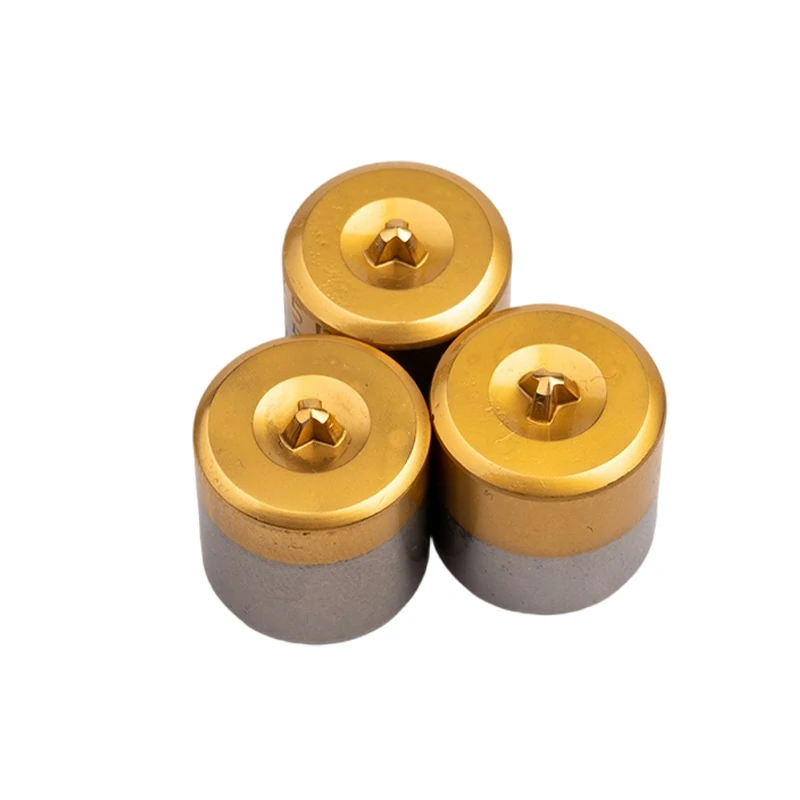
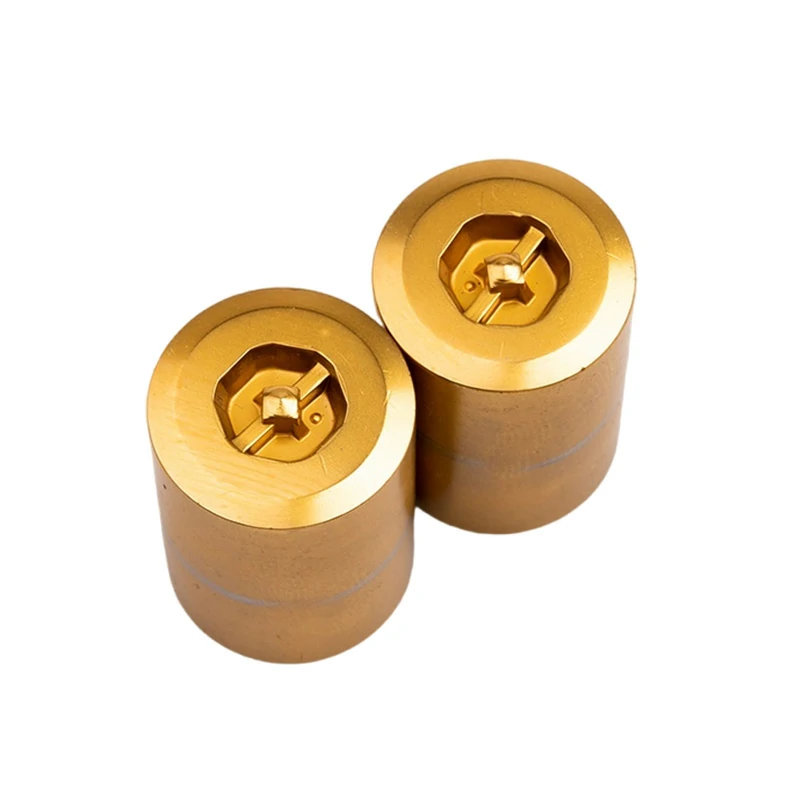
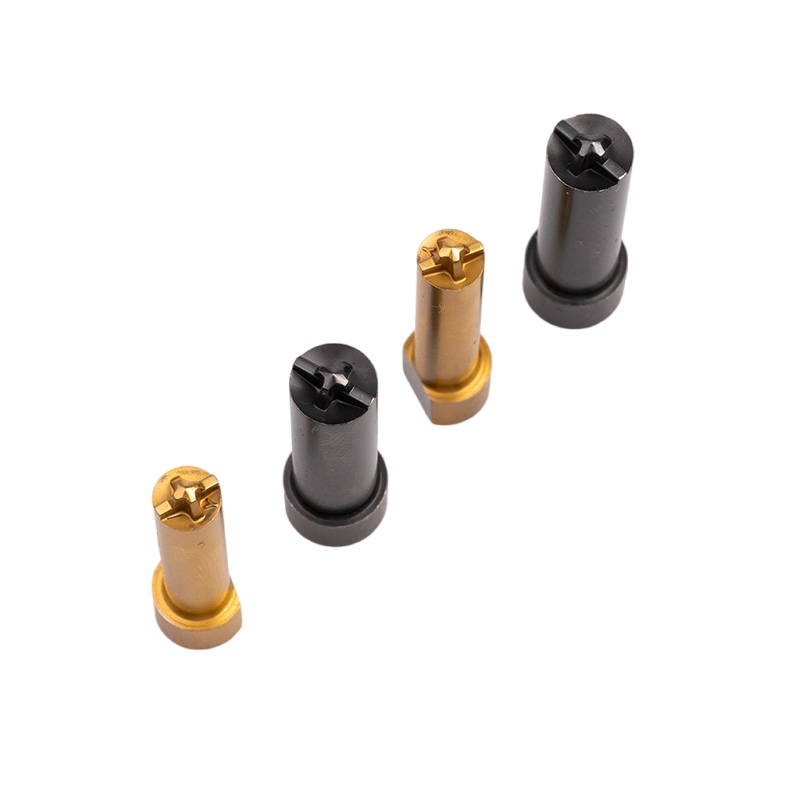
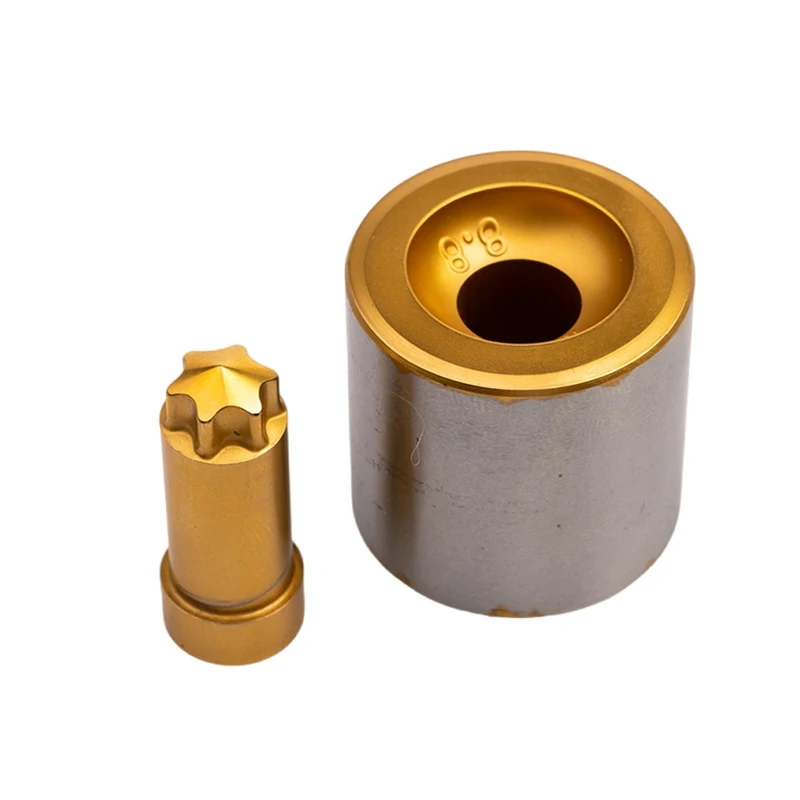
Selecting the right cold heading die material is a critical decision that directly impacts tool life, production efficiency, and final part quality. The optimal choice balances three core properties: exceptional wear resistance to maintain dimensional accuracy, high toughness to prevent chipping and cracking under shock loads, and superior compressive strength to withstand immense forming pressures without deforming. This guide provides an in-depth analysis of material performance requirements, a comparison of common die materials like tool steels and tungsten carbide, and a practical framework for making the best selection for your specific application.
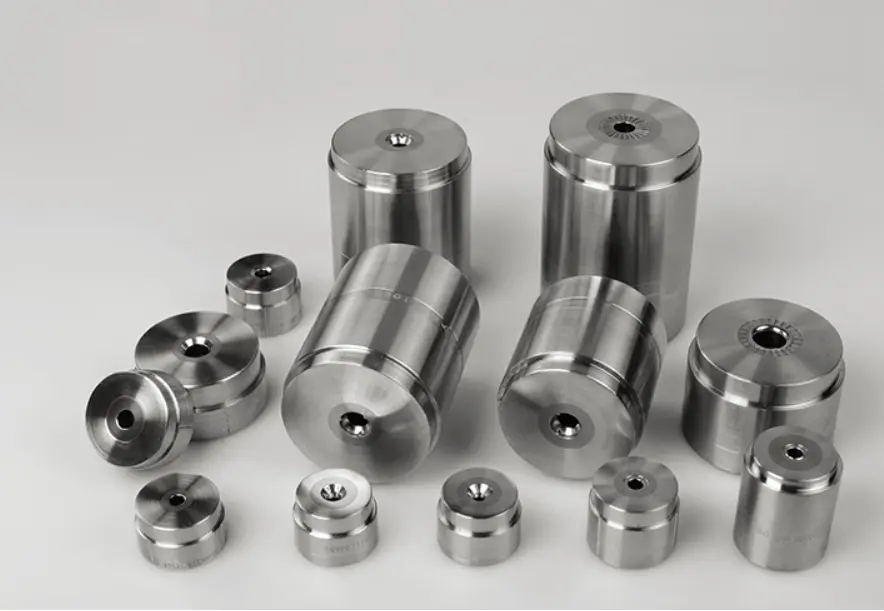
Table of Contents
- What is Cold Heading and Why is the Die So Crucial?
- Core Performance Requirements: The “Big Three” for Cold Heading Die Materials
- A Deep Dive into Common Cold Heading Die Materials
- How to Select the Right Die Material: A Practical Decision-Making Framework
- Beyond the Base Material: Enhancing Die Performance
- Common Die Failures and How Material Selection Mitigates Them
- Partnering with an Expert: Why Your Mold Manufacturer Matters
- Conclusion: Making the Optimal Choice for Peak Performance
- Frequently Asked Questions (FAQ)
What is Cold Heading and Why is the Die So Crucial?
Before diving into material selection, it’s essential to understand the process itself. Cold heading, also known as cold forming, is a high-speed manufacturing process that shapes metal wire at room temperature into complex parts, such as screws, bolts, and rivets. The process involves feeding a wire into a machine that cuts it to length and then forces it into a series of dies and punches, progressively shaping it into the final component.
The Critical Role of the Die in Precision and Longevity
The die is the heart of the cold heading operation. It is the tooling component that contains the cavity into which the metal is forced. Its internal geometry defines the final shape, dimensions, and surface finish of the part. Given the immense pressures (often exceeding 2000 MPa) and repetitive impact cycles, the die is subjected to extreme stress. A failure or even minor wear on the die can lead to out-of-spec parts, production downtime, and significant financial loss. Therefore, the material from which the die is made is not just a detail—it’s a foundational element of a successful and profitable cold heading operation.
Core Performance Requirements: The “Big Three” for Cold Heading Die Materials
When evaluating materials for cold heading dies, performance hinges on a triad of properties. An imbalance in any of these areas can lead to premature failure. The ideal material must be meticulously chosen to provide the right balance for the specific application.
Unmatched Wear Resistance: Combating Abrasive and Adhesive Wear
Wear resistance is the ability of a material to resist material loss from friction and abrasion. In cold heading, the workpiece material is rapidly forced against the die surface, creating intense friction. Abrasive wear occurs as hard particles in the workpiece material (or contaminants) scrape against the die. Adhesive wear (or galling) happens when microscopic welds form between the workpiece and die surfaces, which are then torn apart. A die with poor wear resistance will quickly lose its dimensional accuracy, resulting in parts that are out of tolerance. Materials with high hardness and a microstructure containing hard carbides, like high-speed steels and tungsten carbide, excel in this area.
Exceptional Toughness: Preventing Chipping and Catastrophic Failure
Toughness is a material’s ability to absorb energy and resist fracture or chipping under impact. The cold heading process is not a gentle squeeze; it’s a series of high-energy, high-velocity impacts. Each cycle sends a shockwave through the die. A material that is very hard but lacks toughness (i.e., is brittle) will be prone to micro-chipping at the edges of the die cavity or, in the worst case, catastrophic fracture. This is a critical safety and operational concern. Therefore, the material must possess sufficient toughness to withstand millions of cycles without cracking. This is often a trade-off with wear resistance, as the hardest materials are often the most brittle.
Superior Compressive Strength: Withstanding Immense Forming Pressures
Compressive strength is the material’s capacity to withstand forces that push it together, resisting deformation or crushing. During the forming blow, the die cavity is subjected to incredible hydrostatic pressure as the workpiece material is forced to flow into its new shape. If the die material’s compressive strength is insufficient, the die cavity can slowly deform, swell, or “sink,” leading to a gradual increase in part size and a loss of precision. Materials with high hardness and a strong, homogenous internal structure are essential to maintain the integrity of the die’s geometry over its entire service life.
A Deep Dive into Common Cold Heading Die Materials
The market offers a range of materials suitable for cold heading dies, each with a unique profile of properties, costs, and ideal use cases. The primary categories are tool steels and tungsten carbides.
High-Speed Steels (HSS): The Versatile Workhorses
High-speed steels are a class of tool steels known for their ability to maintain hardness at elevated temperatures, a property called “hot hardness.” While cold heading is a room-temperature process, localized friction can generate significant heat. HSS grades offer an excellent balance of toughness and wear resistance, making them a popular choice for a wide variety of cold heading applications.
- M-Series (e.g., M2, M4): Molybdenum-based HSS like M2 are the industry standard for many general-purpose applications. They provide a good combination of toughness, wear resistance, and cost-effectiveness. M4, with higher carbon and vanadium content, offers improved wear resistance for more demanding jobs.
- Cobalt Grades (e.g., M42): The addition of cobalt (typically 8%) to grades like M42 significantly increases hot hardness and wear resistance. These are often used for heading difficult-to-form materials like stainless steel or for high-speed operations where friction-induced heat is a major concern.
Cold Work Tool Steels: The Tough Contenders
This group of tool steels is designed for high-stress applications at ambient temperatures. They generally offer superior toughness compared to HSS but may have lower wear resistance and hot hardness.
- D-Series (e.g., D2): D2 is a high-carbon, high-chromium tool steel known for its excellent wear resistance due to a high volume of large chromium carbides. However, its toughness is relatively low, making it susceptible to chipping in high-impact or sharp-cornered die designs. It’s best used for forming less severe shapes or abrasive materials where wear is the primary failure mode.
- A-Series (e.g., A2): A2 is an air-hardening tool steel that offers a very good balance between toughness and wear resistance. It is more forgiving than D2 and less prone to chipping, making it a reliable choice for complex dies that require a higher level of impact strength.
Tungsten Carbide (WC): The Ultimate in Hardness and Wear Resistance
Tungsten carbide is a cermet (ceramic-metal composite) made by sintering tungsten carbide particles with a metallic binder, typically cobalt (Co). It is exceptionally hard and boasts wear resistance that can be 10 to 50 times greater than that of tool steels. However, it has lower toughness and is significantly more expensive.
- When to choose Tungsten Carbide? Carbide is the material of choice for long production runs of simple, symmetrical parts (like nut-forming dies or simple fastener blanks) where tooling changes are costly. Its incredible wear resistance ensures consistent part quality over millions of cycles.
- Understanding Binder Content: The percentage of cobalt binder is critical. A lower cobalt content (e.g., 6-10%) results in higher hardness and wear resistance but lower toughness. A higher cobalt content (e.g., 12-20%) increases toughness and impact resistance but slightly reduces wear resistance.
Powder Metallurgy (PM) Tool Steels: The Best of Both Worlds
Powder metallurgy tool steels are manufactured by atomizing molten steel into a fine powder, which is then consolidated under high pressure and temperature (a process called Hot Isostatic Pressing or HIP). This process creates a perfectly homogenous microstructure with very fine, evenly distributed carbides. The result is a material with the high wear resistance of grades like D2 but with toughness approaching that of A2. PM grades (like PM-M4 or PM-23) offer superior performance but come at a premium cost, making them ideal for the most demanding cold heading applications where maximum tool life is paramount.
How to Select the Right Die Material: A Practical Decision-Making Framework
Choosing the optimal material is not about picking the “best” one, but the right one for the job. Consider these five factors in your decision-making process.
Factor 1: Workpiece Material
The material being formed is a primary driver. Soft, non-abrasive materials like low-carbon steel or aluminum may be successfully formed with standard tool steels like M2. Conversely, abrasive or work-hardening materials like stainless steel or high-carbon alloys will require a die with superior wear resistance, such as M42, PM steels, or even tungsten carbide.
Factor 2: Production Volume and Speed
For short runs or prototypes, a cost-effective tool steel (A2, M2) is often sufficient. For high-volume, continuous production runs where downtime for tool changes is extremely costly, the higher initial investment in a long-life material like Tungsten Carbide or a premium PM tool steel pays for itself through increased uptime and consistent quality.
Factor 3: Complexity and Geometry of the Formed Part
Dies with intricate details, sharp corners, or thin sections are inherently more prone to chipping and fracture. For such designs, toughness is the priority. A tougher material like A2 or a high-toughness PM grade would be a safer choice than a more brittle material like D2 or low-cobalt carbide. Simple, symmetrical shapes can tolerate less tough, higher-wear materials.
Factor 4: Press Type and Available Tonnage
The severity of the forming operation influences material choice. Operations requiring extreme deformation or extrusion-like material flow put immense stress on the die. A material with high compressive strength and toughness is necessary to prevent yielding or cracking under these conditions.
Factor 5: Cost-Benefit Analysis (Initial Cost vs. Tool Life)
Never select a material based on initial cost alone. A cheap die that fails after 50,000 cycles is far more expensive than a premium die that runs for 2,000,000 cycles. Calculate the “cost per part” by factoring in the material cost, manufacturing cost of the die, and expected tool life. A comprehensive cost-benefit analysis will almost always point toward a higher-quality material for production applications.
| Material (Example) | Wear Resistance | Toughness | Cost | Best Use Case |
|---|---|---|---|---|
| A2 Tool Steel | Good | Excellent | Low | Complex shapes, short-to-medium runs, where chipping is a concern. |
| D2 Tool Steel | Excellent | Low | Low-Medium | High-wear applications with simple geometry, forming abrasive materials. |
| M2 HSS | Very Good | Good | Medium | General-purpose cold heading, good balance of properties. |
| M42 HSS (Cobalt) | Excellent | Good | Medium-High | High-speed forming, heading stainless or high-alloy steels. |
| PM Tool Steel (e.g., PM-23) | Superior | Very Good | High | High-performance applications requiring both high wear and high toughness. |
| Tungsten Carbide (WC-Co) | Exceptional | Fair | Very High | Very long production runs of simple parts, high-wear environments. |
Beyond the Base Material: Enhancing Die Performance
Selecting the right base material is only part of the equation. Two additional processes are crucial for unlocking the full potential of your cold heading die: heat treatment and surface coatings.
The Importance of Proper Heat Treatment
For tool steels, heat treatment is a non-negotiable process that transforms the steel from a soft, workable state into a hard, strong, and tough final product. This involves a precise cycle of hardening, quenching, and tempering. An improper heat treatment can ruin even the most expensive steel, leaving it too soft, too brittle, or dimensionally unstable. Always ensure your die manufacturer has proven expertise in the specific heat treatment protocols for the selected material grade.
Advanced Surface Coatings (PVD, CVD) for Reduced Friction and Increased Life
Surface coatings are ultra-thin (2-5 microns), super-hard ceramic layers applied to the die’s working surface. They do not change the properties of the base material but add a high-performance functional surface. Key benefits include:
- Reduced Friction: Coatings like TiN or AlCrN have a low coefficient of friction, which reduces galling and allows for smoother material flow.
- Increased Surface Hardness: The coating acts as a primary barrier against abrasive wear, significantly extending the life of the die.
- Common Coatings: TiN (Titanium Nitride) is a good general-purpose coating. TiCN (Titanium Carbonitride) offers higher hardness for more wear-intensive jobs. AlCrN (Aluminum Chromium Nitride) provides excellent performance in high-temperature applications.
Common Die Failures and How Material Selection Mitigates Them
Understanding failure modes helps in making proactive material choices. The three most common failures directly relate to the “big three” properties.
Gross Cracking & Chipping (Toughness Issue)
This is often a catastrophic failure caused by insufficient material toughness. It’s common in dies with sharp corners or when using a brittle material like D2 or low-cobalt carbide in a high-impact application. Mitigation: Select a tougher material (e.g., A2, M-series HSS, higher-cobalt carbide) or use a PM grade. Also, ensure generous radii are designed into the die wherever possible.
Gradual Wear & Loss of Detail (Hardness/Wear Resistance Issue)
This is the most common end-of-life failure mode, where the die slowly wears away, causing parts to fall out of specification. Mitigation: Choose a material with higher hardness and wear resistance (e.g., upgrading from M2 to M42 or a PM steel). Applying a PVD surface coating is also a highly effective strategy to combat gradual wear.
Plastic Deformation (Compressive Strength Issue)
This occurs when the forming pressure exceeds the material’s compressive strength, causing the die cavity to permanently deform or “sink.” Mitigation: Select a material with higher hardness and compressive strength, such as a high-alloy tool steel, PM steel, or tungsten carbide. Proper heat treatment is also critical to achieving maximum compressive strength.
Partnering with an Expert: Why Your Mold Manufacturer Matters
The information in this guide highlights the complexity of selecting the right die material. It’s a decision that requires a deep understanding of metallurgy, process parameters, and failure analysis. This is where partnering with an experienced mold and die manufacturer like Xilu Mold becomes invaluable. An expert partner can go beyond just supplying a tool; they can consult on your entire process, analyze your specific application, and recommend the optimal combination of material, heat treatment, and coating to maximize your productivity and profitability.
Conclusion: Making the Optimal Choice for Peak Performance
Selecting the best material for a cold heading die is a strategic engineering decision that balances performance, tool life, and cost. There is no single “best” material, only the most appropriate one for your unique application. By systematically evaluating your workpiece material, production volume, part complexity, and budget, and by understanding the core requirements of wear resistance, toughness, and compressive strength, you can make an informed choice. For the most critical applications, leveraging advanced materials like PM steels and surface coatings, in partnership with a knowledgeable die-making expert, will always yield the best return on investment.
Frequently Asked Questions (FAQ)
What’s the difference between cold heading and cold forging?
The terms are often used interchangeably, but cold heading typically refers to the high-speed process of forming fasteners and simple shapes from wire. Cold forging can be a broader term that includes forming larger slugs or billets in slower, more powerful presses. The fundamental principles of die material selection, however, remain very similar for both.
Is D2 tool steel good for cold heading dies?
D2 can be used for cold heading, but with caution. Its excellent wear resistance makes it suitable for applications where abrasion is high and impact is low. However, its relatively poor toughness makes it a risky choice for dies with sharp corners or for high-impact forming operations, as it is prone to chipping.
How does binder percentage in tungsten carbide affect performance?
The cobalt (Co) binder acts as the “glue” holding the hard tungsten carbide grains together. A lower binder percentage (e.g., 6% Co) means more hard WC grains, resulting in higher hardness and wear resistance but lower toughness. A higher binder percentage (e.g., 15% Co) increases toughness and fracture resistance but slightly reduces hardness and wear resistance.
When should I use a PVD coating on my die?
You should consider a PVD coating whenever you need to extend tool life beyond what the base material can offer. It is particularly effective for: 1) High-volume production runs to reduce wear. 2) Forming “gummy” materials like stainless steel or aluminum to prevent galling. 3) High-speed operations where friction and heat are significant factors.